Deep Diving Specialty
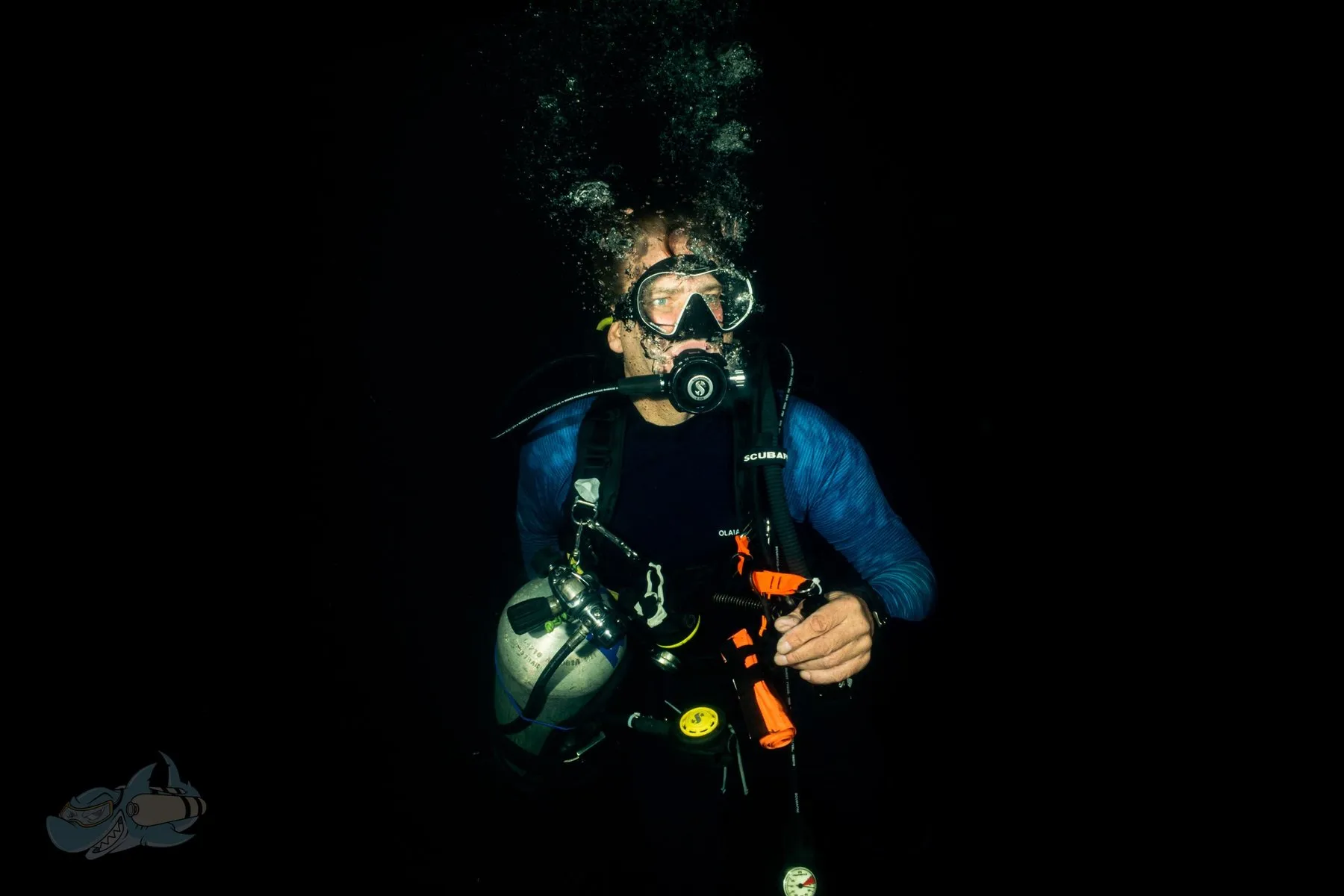
Thirty metres changes things. Forty metres changes more.
There's a meaningful difference between diving at 18m and diving at 30m. And another between 30m and 40m.
At 40m, you're at the recreational limit. Your no-decompression time is short. Narcosis is real and present, not theoretical background noise. Your gas consumption is higher than at any previous depth. The margin for an unhurried ascent is smaller. And if you've never prepared for these differences specifically, they can catch you out.
Most divers reach 30m during Advanced Open Water and call it good. The Deep Diving Specialty takes you to 40m, but more importantly, it takes you there with the gas planning, narcosis awareness, and depth discipline that makes the difference between a diver who's technically allowed to be there and one who's genuinely comfortable at that depth.
What's included
- 2 pool / confined water sessions
- 6 open water dives across depth range (from 20m to 40m progressively)
- PADI Deep Diver certification
- All dive centre fees (tanks, weights, boat, sites)
Who this is for
- Advanced Open Water certified divers with 25+ logged dives
- Divers who want to access the 30 to 40m depth range with proper preparation
- Anyone who feels uncomfortable at depth and wants to build genuine confidence
- Divers working toward technical training: deep diving discipline is foundational
Prerequisites
- PADI Advanced Open Water (or equivalent)
- 25+ logged dives
- Enriched Air Nitrox certification recommended (can be done concurrently)
What you'll learn
Narcosis awareness and management
Nitrogen narcosis at 30 to 40m isn't dramatic. It's subtle, and that's what makes it worth understanding explicitly.
- What narcosis actually does to cognitive function at depth
- Your personal narcosis indicators: what to watch for in yourself and in your buddy
- The difference between feeling fine and being impaired
- Pre-dive planning that accounts for narcosis: keeping task loading manageable
- When to call the dive and how to make that call before it becomes urgent
Gas planning at depth
Air consumption at 40m is roughly double what it is at 10m. Gas planning that works for shallow diving doesn't automatically scale.
- RMV (respiratory minute volume) and how depth affects it
- Turn-around pressure based on your actual consumption, not a fixed rule
- What happens to your no-decompression limit at 30, 35, and 40m: knowing these before you descend, not reading them off a computer at the bottom
- Safety stop discipline from 40m: the mechanics, the timing, the ascent rate
Deep diving procedures
- Descent control and equalisation management at higher descent rates
- Stabilising at depth before beginning the planned dive, not rushing the plan the moment you arrive
- Monitoring your buddy for signs of narcosis, gas issues, and equipment problems
- Emergency ascent from 40m: the procedure, the gas implications, and when it's the right call
Equipment considerations
- How deep affects buoyancy (wetsuit compression, BCD volume management)
- Light at depth: colour loss, torch use on deep dives
- Dive computer interpretation at recreational deep limits
Course structure
4 days, with depths increasing progressively. No 40m dive until 30m performance is stable.
- Days 1 to 2: Pool sessions and warm-up dives: equipment, buoyancy, gas awareness
- Days 2 to 4: Progressive deep dives: 20m, 25m, 30m, then 35 to 40m
- Maximum depth: 40 metres
- Ratio: 2 students per instructor maximum
Taught by Donarun personally.
Where we train
The Maldives, Sri Lanka, and India. Site selection based on conditions and what's achievable at your target depth. Confirmed when scheduling.
What comes next
- Sidemount: better gas management and streamlining for deep diving
- Rescue Diver: if you haven't done it yet, now is the time
- Tec 40 / Intro to Tech: where the deep diving discipline you've built becomes the foundation for technical training
Frequently asked questions
Why do this course if I already have Advanced Open Water?
Advanced Open Water introduces deep diving to 30m. The Deep Diving Specialty builds the discipline around it: narcosis management, gas planning specific to deep profiles, and six dives specifically focused on developing competence at depth. The AOW deep dive is an introduction; this is the course.
Do I need Nitrox before doing this?
Not required, but recommended. Nitrox extends your no-decompression time at 30 to 40m meaningfully. It can be done concurrently with this course if you haven't done it yet.
Is 40m dangerous?
Not if you're properly prepared. The recreational 40m limit exists for good reasons: short no-decompression times, narcosis, higher gas consumption. This course addresses each of those. Divers who reach 40m without specific preparation often find themselves managing multiple new challenges at once. This course means those challenges are familiar before you face them.
Will I feel narcosis during the course?
You likely will at some level. That's one of the reasons the course is valuable. Experiencing narcosis in a controlled training environment, identifying your own response, and practicing the management is exactly the preparation that makes 40m diving safe.
Enquire about training
Enquire here. Donarun responds personally to every enquiry.
Pricing
Pricing is tailored to your course, location, and schedule. A full breakdown is provided before any commitment is made.
Frequently asked questions
- What are the prerequisites for Deep Diving Specialty?
- No specific prerequisites; enquire directly to confirm the course suits your experience level.
- What certification do I receive after completing Deep Diving Specialty?
- You receive a PADI Deep Diving Specialty certification, recognised worldwide, upon successful completion.
- How long is the Deep Diving Specialty course?
- The Deep Diving Specialty course runs for 4 days.
- Where do you run this course?
- Courses run across the Maldives, Sri Lanka, and India (Pondicherry, Lakshadweep, and Meghalaya), scheduled around your dates and the right dive site for the course.
- How much does Deep Diving Specialty cost?
- Pricing is quoted individually, because dive centre fees, certification costs, and logistics vary by course, location, and schedule. You get a full breakdown before any commitment.
- Who teaches this course?
- Donarun Das, a TDI Trimix Instructor, KISS Sidewinder CCR Instructor, and PADI Staff Instructor teaching across the Maldives, Sri Lanka, and India, with 15+ years of diving experience and a mechanical engineering background from NIT Silchar.