Sidemount Diver
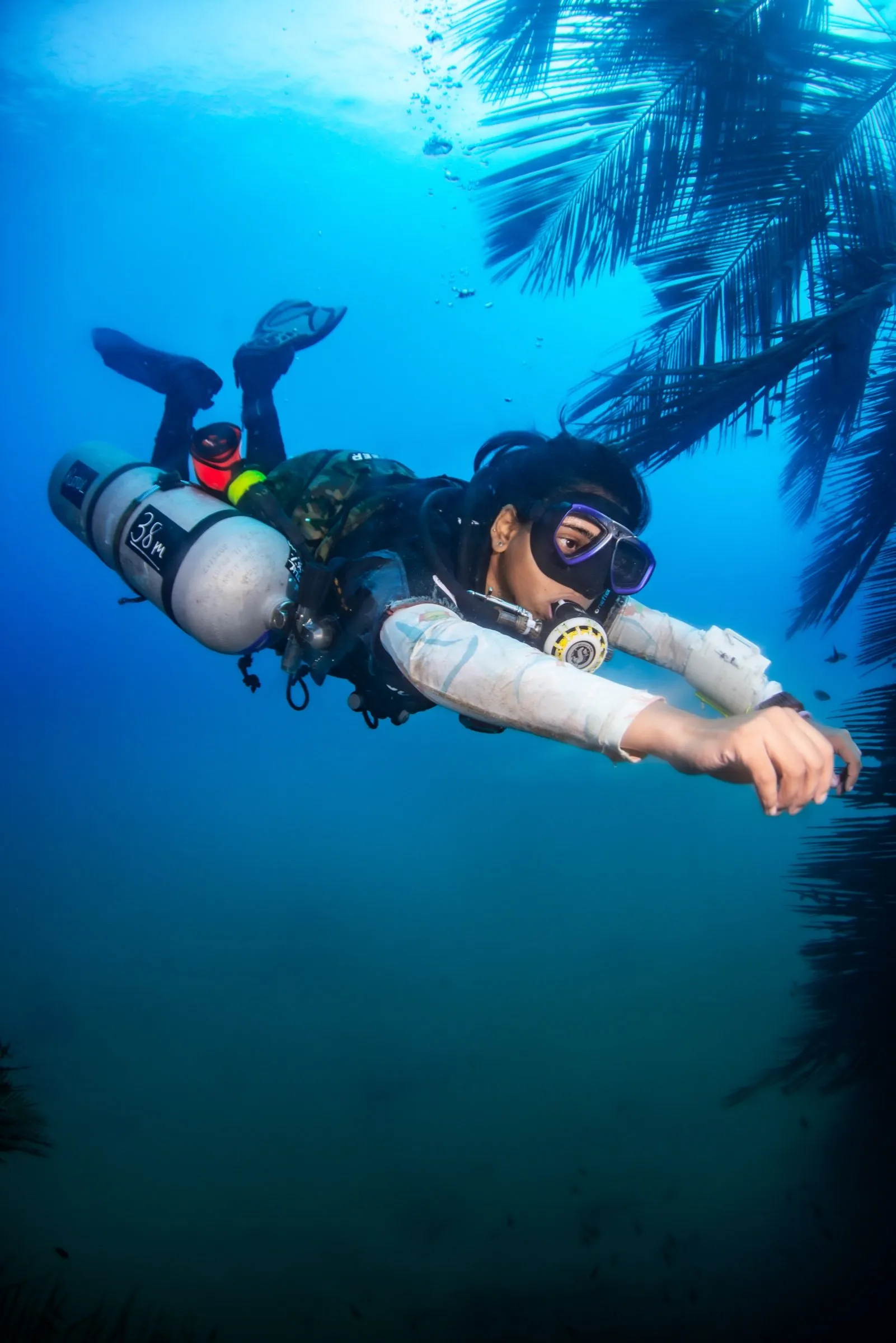
Sidemount isn't just carrying cylinders differently

There's a version of sidemount where you take your backmount kit, attach cylinders to your sides instead, and call it sidemount. It looks like sidemount. Underwater, it doesn't dive like sidemount, because sidemount done properly is a completely different relationship with buoyancy, trim, and the way you move through water.
When it's configured correctly, sidemount is the most streamlined, balanced, and controllable rig in recreational diving. Cylinders along your body where your hands can reach them. Weight distributed flat and evenly. Gas management with true redundancy: two independent systems, each accessible independently. In restricted spaces, through tight passages, in surge, the sidemount profile works where backmount struggles.
Getting there requires getting the configuration right, building the buoyancy habits that sidemount demands, and practicing in the water until it feels natural rather than awkward.
This course does that. Properly.
What's included
- 1 pool / confined water session
- 3 long open water dives
- PADI Sidemount Diver certification
- All dive centre fees (tanks, weights, boat, sites)
Who this is for
- Advanced Open Water certified divers who want to dive in sidemount configuration
- Divers who find backmount uncomfortable or poorly suited to their body
- Anyone planning to dive tight spaces, swim-throughs, or restricted environments
- Divers considering technical diving, since sidemount is the configuration of choice for cave, CCR, and most technical training
- Underwater photographers who want better trim and stability
Prerequisites
- PADI Advanced Open Water (or equivalent)
- 25+ logged dives
- Comfortable neutral buoyancy
What you'll learn
Sidemount configuration: getting it right
Configuration is where most sidemount courses go wrong. They show you a photo of how it should look, set you up to resemble it, and move on. The result looks correct at the surface and drifts into something else underwater.
This course builds the configuration from the physics:
- Harness fit and adjustment for your specific body and exposure suit
- Cylinder trim (the angle, the attachment points, the bungee tension) and why each matters for buoyancy and drag
- Regulator routing: why the long hose goes where it goes, how the backup routes, and how both stay accessible under gloves
- D-ring placement for lights, computers, and accessories, so everything has a position and nothing creates drag
- Setting up for different cylinders (aluminium vs steel) and how that changes the configuration
You'll go into the pool with your actual configuration, see what needs adjusting, and come out with a setup that works.
Buoyancy and trim in sidemount
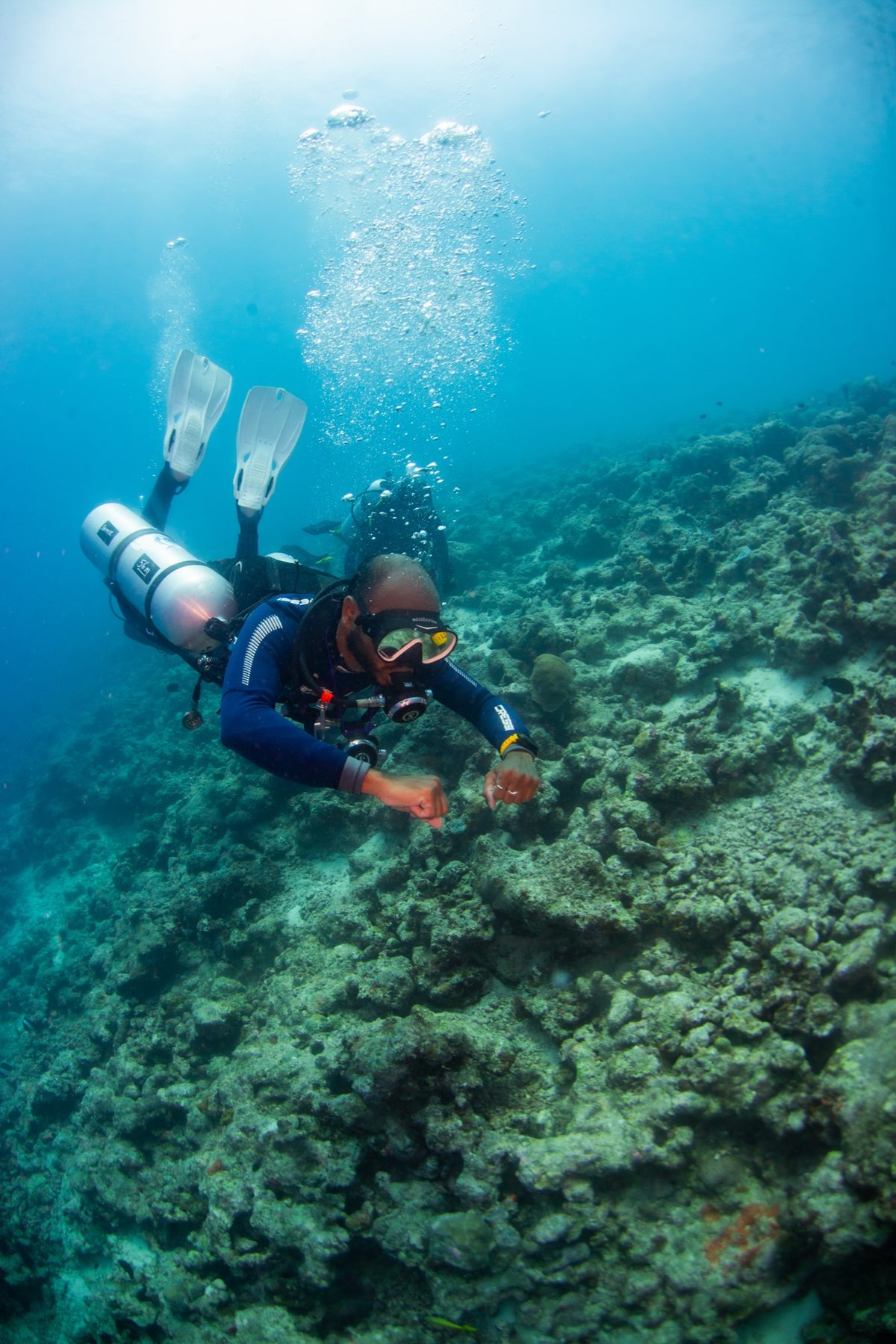
Sidemount buoyancy is different from backmount. The weight distribution is different. The BCD inflates differently. The cylinders drain asymmetrically as you breathe. These all interact.
- Achieving horizontal trim with sidemount cylinders at different fill levels
- Managing buoyancy as your cylinders drain through the dive
- Breathing for depth control, the same technique as backmount, but with different sensitivity to body position
- Staying flat in surge, current, and while turning
Gas management
Sidemount gives you true redundancy: two regulators, two independent gas supplies, both accessible from the surface.
- Alternating between cylinders to keep gas balanced throughout the dive
- Valve management: which valve controls which regulator, and how to manage them cleanly
- Bubble check procedure with a buddy in sidemount configuration
- Out-of-gas response, your own and your buddy's, in sidemount
Propulsion and control
- Moving through water without cylinders swinging or dragging
- Modified frog kick and back-kick with sidemount cylinders attached
- Navigating tight spaces and swim-throughs with the reduced profile sidemount provides
- Mounting and removing cylinders in the water
Course structure
4 days. The pool session focuses entirely on configuration and initial buoyancy. The open water dives are long, so there's time to actually develop the skills rather than just demonstrate them.
- Day 1: Pool session, configuration, trim, initial buoyancy, valve drills
- Day 2: First open water dive, configuration refinement in real conditions
- Day 3: Long dive, gas management, trim under real conditions, swim-throughs if available
- Day 4: Final long dive, independent navigation and skills integration
- Ratio: 2 students per instructor maximum
Taught by Donarun personally.
Where we train
The Maldives, Sri Lanka, and India. Site selection includes locations with swim-throughs or restricted passages where the reduced sidemount profile is genuinely useful. Confirmed when scheduling.
What comes next
- Tec 40 / Intro to Tech: if you want to take the configuration to expedition and technical standard
- Wreck Diver: wrecks are where the sidemount profile pays off most obviously
- Tec 40 / Intro to Tech: sidemount is the recommended configuration for technical training
Frequently asked questions
Do I need my own sidemount gear?
Sidemount harnesses and cylinders can sometimes be hired for the course. Mention your gear situation when you enquire and we'll confirm what's available. If you're serious about sidemount, owning your own harness before the course starts is worth it: fit matters, and rented gear rarely fits perfectly.
Is sidemount harder than backmount?
The configuration is more complex to set up. The diving, once configuration is dialled, is generally more comfortable for most people. The transition takes a pool session and a couple of dives to feel natural. After that, most divers find it easier to manage in the water than backmount.
I've tried sidemount before and it felt wrong. Is that fixable?
Almost always. Sidemount that feels wrong is almost always a configuration problem: the harness fit, the cylinder attachment points, the bungee tension. If you've tried sidemount and it was uncomfortable, awkward, or your cylinders wouldn't stay where they were supposed to, this course is specifically what fixes that.
Is sidemount required for technical diving?
Not required by most agencies. But most experienced technical divers, and almost all cave divers, use sidemount for good reasons: streamlining, accessibility, redundancy, and the ability to pass cylinders through tight restrictions. Starting sidemount at the recreational level means the configuration is familiar before the technical training adds complexity on top.
Enquire about training
Enquire here. Donarun responds personally to every enquiry.
Pricing
Pricing is tailored to your course, location, and schedule. A full breakdown is provided before any commitment is made.
Frequently asked questions
- What are the prerequisites for Sidemount Diver?
- No specific prerequisites; enquire directly to confirm the course suits your experience level.
- What certification do I receive after completing Sidemount Diver?
- You receive a PADI Sidemount Diver certification, recognised worldwide, upon successful completion.
- How long is the Sidemount Diver course?
- The Sidemount Diver course runs for 4 days.
- Where do you run this course?
- Courses run across the Maldives, Sri Lanka, and India (Pondicherry, Lakshadweep, and Meghalaya), scheduled around your dates and the right dive site for the course.
- How much does Sidemount Diver cost?
- Pricing is quoted individually, because dive centre fees, certification costs, and logistics vary by course, location, and schedule. You get a full breakdown before any commitment.
- Who teaches this course?
- Donarun Das, a TDI Trimix Instructor, KISS Sidewinder CCR Instructor, and PADI Staff Instructor teaching across the Maldives, Sri Lanka, and India, with 15+ years of diving experience and a mechanical engineering background from NIT Silchar.