Tec 40 / Intro to Tech
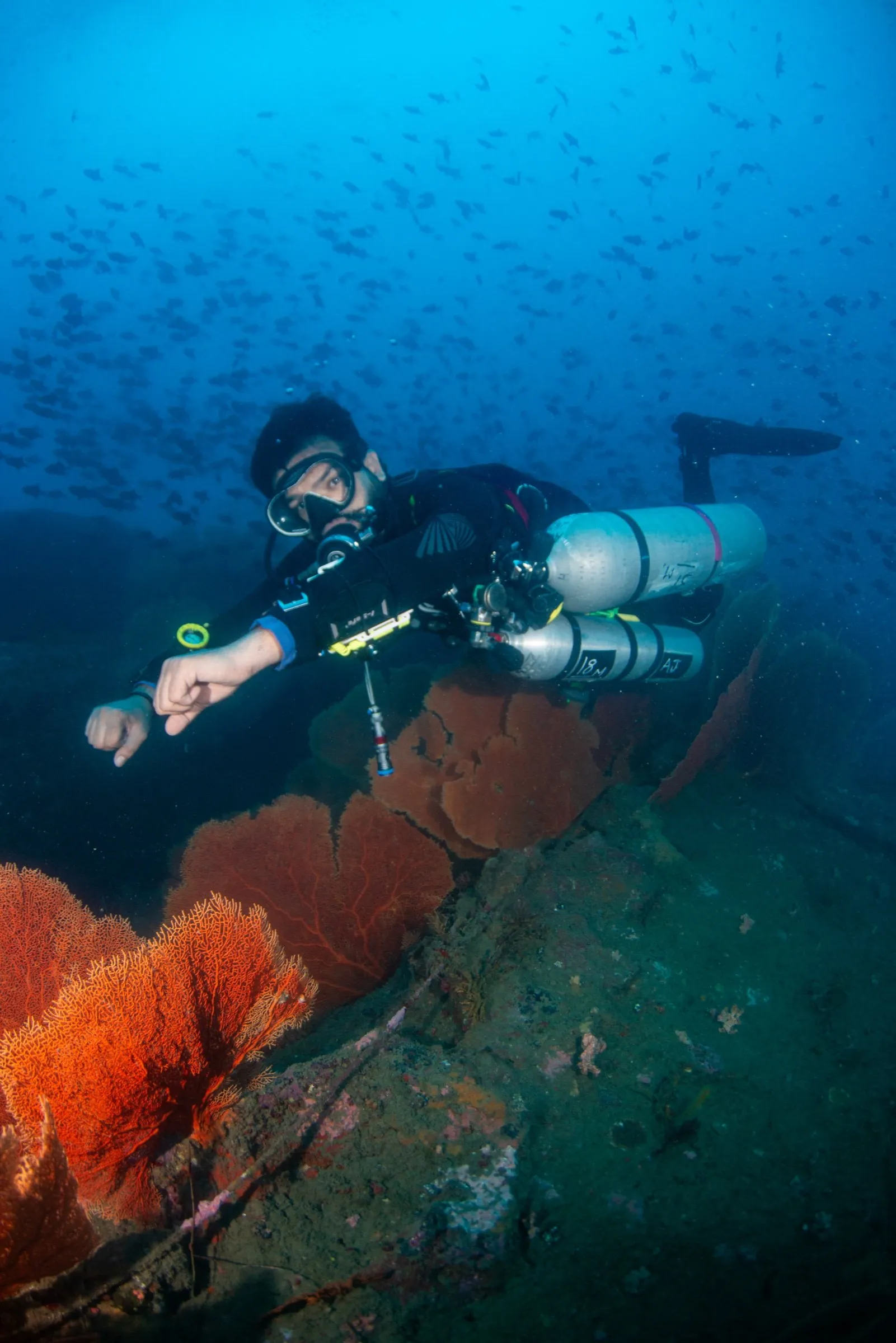
You'll feel like a beginner again
Most people who get in touch about technical training have between 50 and 200 dives and feel pretty comfortable underwater. By the end of the first day of Tec 40, most of them feel like beginners.
That's not a bad thing. It means the course is working.
Technical diving isn't a step up from recreational diving. It's a different thing entirely. The planning is different. The failure modes are different. The consequences are different. The dive computer that looked after your decompression exposure becomes a backup. The single cylinder you've been diving on gets replaced by a twinset or sidemount rig with redundant regulators. And the "when in doubt, go up" instinct that every recreational course builds into you? That gets replaced, systematically, by specific planned responses to specific failure scenarios.
The divers who thrive in this course aren't always the most experienced recreational divers. They're the ones who come in treating it as the genuine beginning it is, because it is.
What actually changes
Here's the most important shift: before this course, your dive computer manages your decompression exposure. After it, you manage your exposure and the computer confirms your plan.
That's not a subtle difference. It requires a different habit of mind before every dive, gas planning, thinking through what could go wrong, coordinating with your team, and building that habit takes deliberate practice. This course is where that practice begins.
In practical terms:
- You plan your gas before the dive, not watch numbers during it
- You understand the decompression logic your computer runs, not just follow its output
- You have practiced responses to specific failure scenarios, not a generic "ascend"
- You operate as a technical team, not two divers who happen to be in the water at the same time
What you'll learn
Decompression theory: the actual logic
Not the simplified version. The real reasoning behind every number, so that when something doesn't go to plan, you understand what decision you're actually making.
- How inert gas loads across tissue compartments at depth and off-gasses on the way up
- M-values and gradient factors: what they represent, how computers use them, why adjusting them changes your ascent
- Oxygen toxicity: CNS and pulmonary limits, how to track them across a dive day
- Why limited decompression stops exist and what they're physiologically doing
- What happens if a stop is missed: the decision framework, not just "don't miss stops"
Turn the dials · 40 m for 12 min on air
- First stop
- —
- Deco time
- —
- Runtime
- —
Dive profile · depth over runtime
Inside the model · tissue vs ambient pressure
The amber line is Bühlmann's raw M-value — the theoretical ceiling, and it never moves. The teal dashed line is your working ceiling: a straight line drawn from GF Lo at the deepest stop to GF Hi at the surface. The dark line is the dive itself (the 12.5-minute tissue). Move the dials and watch the teal line tilt — the ascent has to stay below it the whole way up.
Drop GF Lo and the first stop sinks deeper. Drop GF Hi and the shallow stops stretch out. Same dive, same Bühlmann model underneath — you're only choosing how much of its permitted margin to spend, and where on the ascent you spend it.
Gas planning from first principles
- RMV calculation: how to measure it accurately, how depth affects it
- Rock-bottom gas calculation: the logic behind the formula, not just the formula
- Planning for the loss of gas at any point in the dive
- Deco gas selection and MOD management when a stage cylinder's in the picture
Equipment configuration
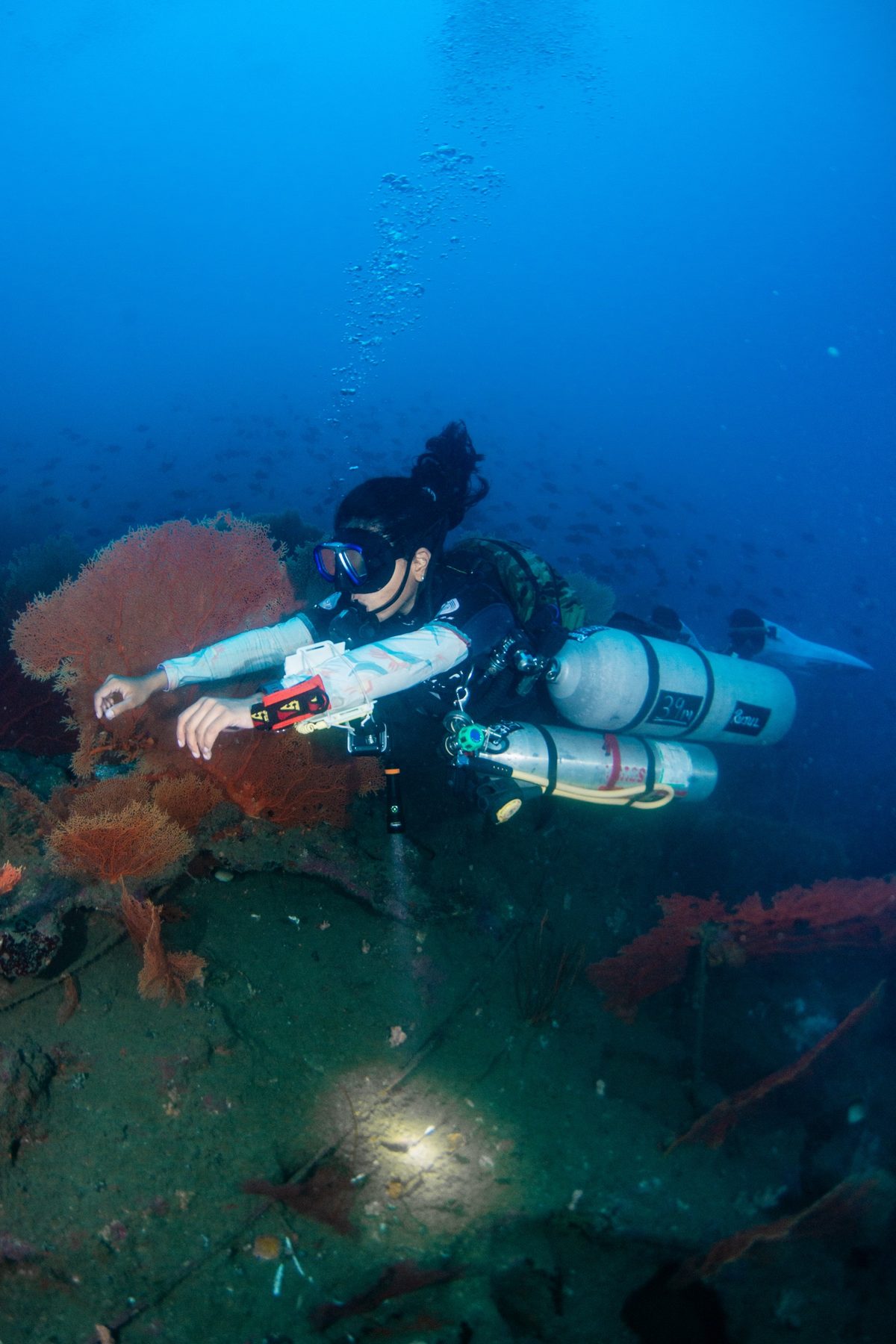
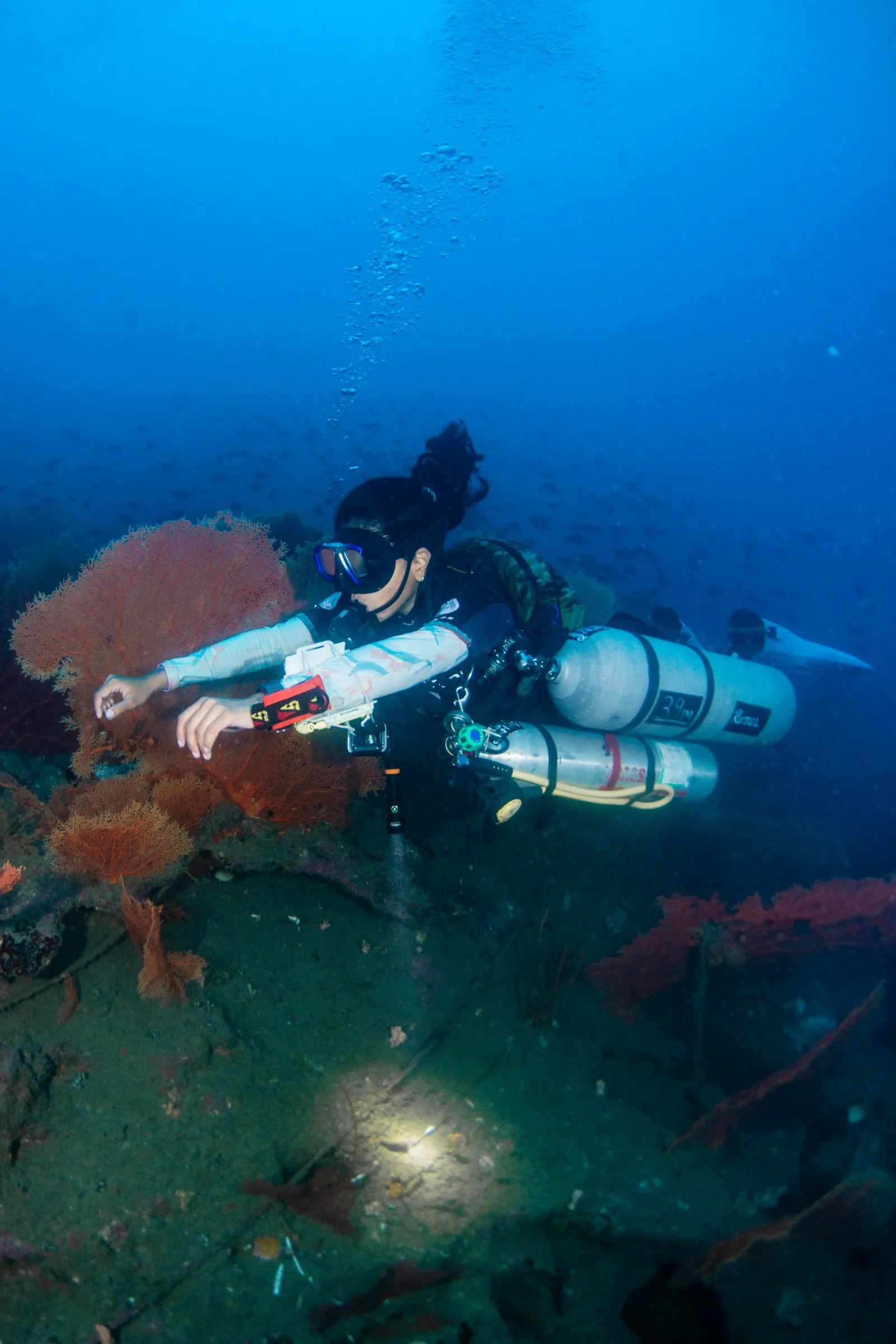
- Twinset or sidemount setup to technical standards: streamlined, redundant, accessible
- Long-hose primary regulator: why it's set up this way and how to deploy it
- Stage cylinder integration: mounting, rigging, pre-dive gas check, switch procedure
- Valve shutdown drills: the procedure, the timing, the stress response
- What this configuration actually feels like to carry before you're managing it underwater at depth
Buoyancy and trim to a technical standard
Recreational buoyancy is good enough for recreational diving. It isn't good enough for technical diving, where you're managing gas, team position, and equipment all at once.
- Flat, stable horizontal trim with stage cylinders attached
- Buoyancy control without using your hands, since both hands occupied is normal
- Back-kick and helicopter turn: not advanced tricks, standard tools
- Hovering without drift during decompression stops
Failure response under task loading
Technical diving means managing several things simultaneously. Training adds complexity deliberately:
- Equipment problem during descent: recognise, respond, continue or abort
- Gas switch under mild stress: same as calm water, done under pressure
- Buoyancy management while solving a problem at depth
- S-drills and valve shutdown under realistic conditions
- Team communication and out-of-gas response
How this course is different
Tec 40 is a standard course. How it's taught is not.
- You progress on competence, not a dive count. Skills are filmed, reviewed, and refined until they hold under stress. No box-ticking, no rushing you to a card.
- You learn the decompression logic, not just the computer's output. When a dive doesn't go to plan, you understand the decision you're actually making.
- Small groups, honest feedback. If something isn't right, you'll know exactly what to fix, not vague encouragement.
- Taught by someone who dives it. The planning principles here are the same ones I use on 80 to 100m expedition dives.
Prerequisites
- Advanced Open Water or equivalent
- 30 to 50 logged dives
- Comfortable neutral buoyancy, comfortable and not still developing it
- Physical fitness to manage the gear load
- Enriched Air Nitrox certification (or concurrent enrolment)
Course duration
3 days. Divers who already have solid buoyancy and trim tend to move through in-water skills faster. Decompression theory gets the time it needs regardless: understanding it before diving it isn't optional.
Gear
- Twinset (backmount) or sidemount rig
- Long-hose primary regulator
- One deco/stage cylinder with regulator
- Two cutting devices
- Primary torch and backup light
- Two DSMBs with spools
- Wrist slate
- Decompression-capable dive computer
Gear hire can be arranged with advance notice. Mention this when you get in touch.
Where you'll train
Training runs in warm, clear water across the Maldives, Sri Lanka, and India. For divers flying in from abroad, that's the point: technical skills come faster when you can see, you're warm, and you can dive every day for a week instead of a weekend at a time.
Maldives: clean water and predictable visibility, well suited to your first technical training. Sri Lanka: varied reef and wreck diving for every technical level. India (Pondicherry, Lakshadweep): warm water with high dive repetition and varied conditions.
Most divers flying in book one continuous block and dive every day. Tell me your window and I'll confirm the site and dates.
What comes next
- Tec 45 / Advanced Nitrox & Decompression Procedures: genuine multi-gas staged decompression
- Tec 50 / Extended Range: the upper limit of air-range technical diving
From there: trimix, CCR, overhead environments.
The theory behind the course
The depth notes go deeper on the science this course puts into practice:
Frequently asked questions
How do I know if I'm ready for technical diving?
If you can hold neutral buoyancy comfortably through a full dive, manage your air consumption without anxiety, and stay reasonably calm when things go sideways, you have the foundation. The course builds the technical layer on top of that. If your buoyancy is still developing, a Buoyancy and Trim session before Tec 40 makes everything faster and more enjoyable.
PADI Tec 40 or TDI Intro to Tech: does it matter?
Both cover the same core competencies. PADI Tec 40 fits into the PADI Tec pathway (Tec 45 → Tec 50 → Tec 65 Trimix). TDI Intro to Tech feeds into TDI Advanced Nitrox, Decompression Procedures, and Trimix. Your long-term agency preference and future course pathway determines the better fit. Discuss this when you enquire.
What's the actual decompression obligation at this level?
Limited, up to 10 minutes total decompression time. The course teaches you to plan for it, execute it, and manage the scenarios that require you to adapt mid-dive. It's real decompression, not simulated.
Can I use my existing recreational gear?
A single cylinder recreational setup isn't sufficient. You need a twinset or sidemount rig with redundant regulators. Gear hire can sometimes be arranged. Mention this when you enquire.
Enquire about training
Tell me your experience, your goals, and your rough travel window, and I'll tell you honestly where to start.
Enquire here. I answer every enquiry myself, whatever your timezone.
Pricing
Pricing is tailored to your course, location, and schedule. A full breakdown is provided before any commitment is made.
Frequently asked questions
- What are the prerequisites for Tec 40 / Intro to Tech?
- No specific prerequisites; enquire directly to confirm the course suits your experience level.
- What certification do I receive after completing Tec 40 / Intro to Tech?
- You receive a PADI / TDI Tec 40 / Intro to Tech certification, recognised worldwide, upon successful completion.
- How long is the Tec 40 / Intro to Tech course?
- The Tec 40 / Intro to Tech course runs for 3 days.
- Where do you run this course?
- Courses run across the Maldives, Sri Lanka, and India (Pondicherry, Lakshadweep, and Meghalaya), scheduled around your dates and the right dive site for the course.
- How much does Tec 40 / Intro to Tech cost?
- Pricing is quoted individually, because dive centre fees, certification costs, and logistics vary by course, location, and schedule. You get a full breakdown before any commitment.
- Who teaches this course?
- Donarun Das, a TDI Trimix Instructor, KISS Sidewinder CCR Instructor, and PADI Staff Instructor teaching across the Maldives, Sri Lanka, and India, with 15+ years of diving experience and a mechanical engineering background from NIT Silchar.