Buoyancy & Trim
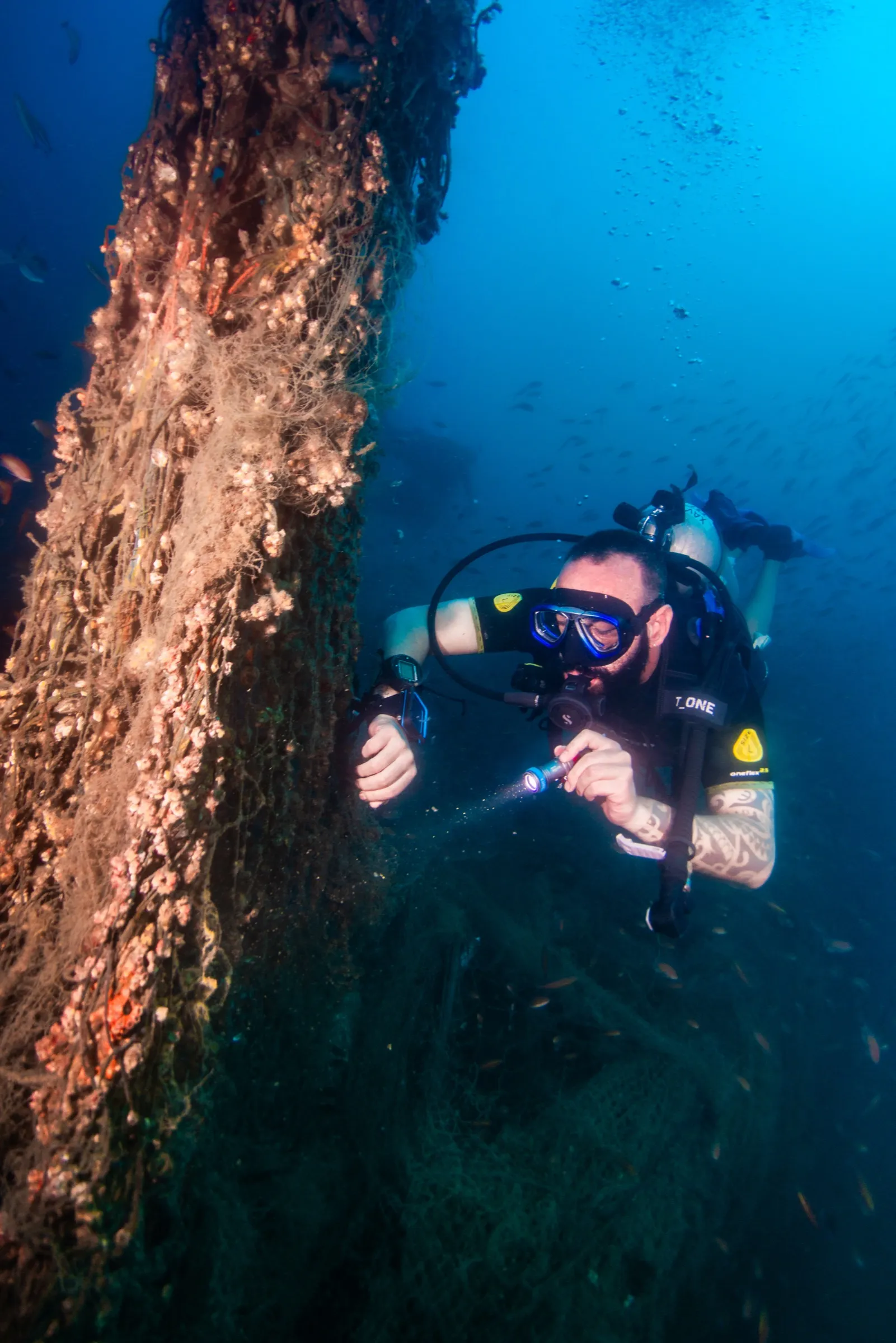
Most recreational divers are semi-vertical in the water, kicking constantly to stay at depth, and have no idea. They have practised this pattern on every dive they have done. This course makes your actual skill level visible, clearly and honestly, and then addresses it with specific, repeatable drills until the correct pattern becomes automatic.
Almost entirely in the water. No theory for its own sake. Real feedback after every session.
Who this course is for
- Any diver who wants genuine improvement in underwater control
- Divers whose buoyancy is "fine most of the time" but inconsistent under real conditions
- Underwater photographers and videographers who need stable, precise positioning
- Anyone preparing for technical diving, where unstable buoyancy creates direct safety risk
Prerequisites
- Open Water certification
- 20+ logged dives recommended for best results
What this course covers
Horizontal trim: the position almost nobody has
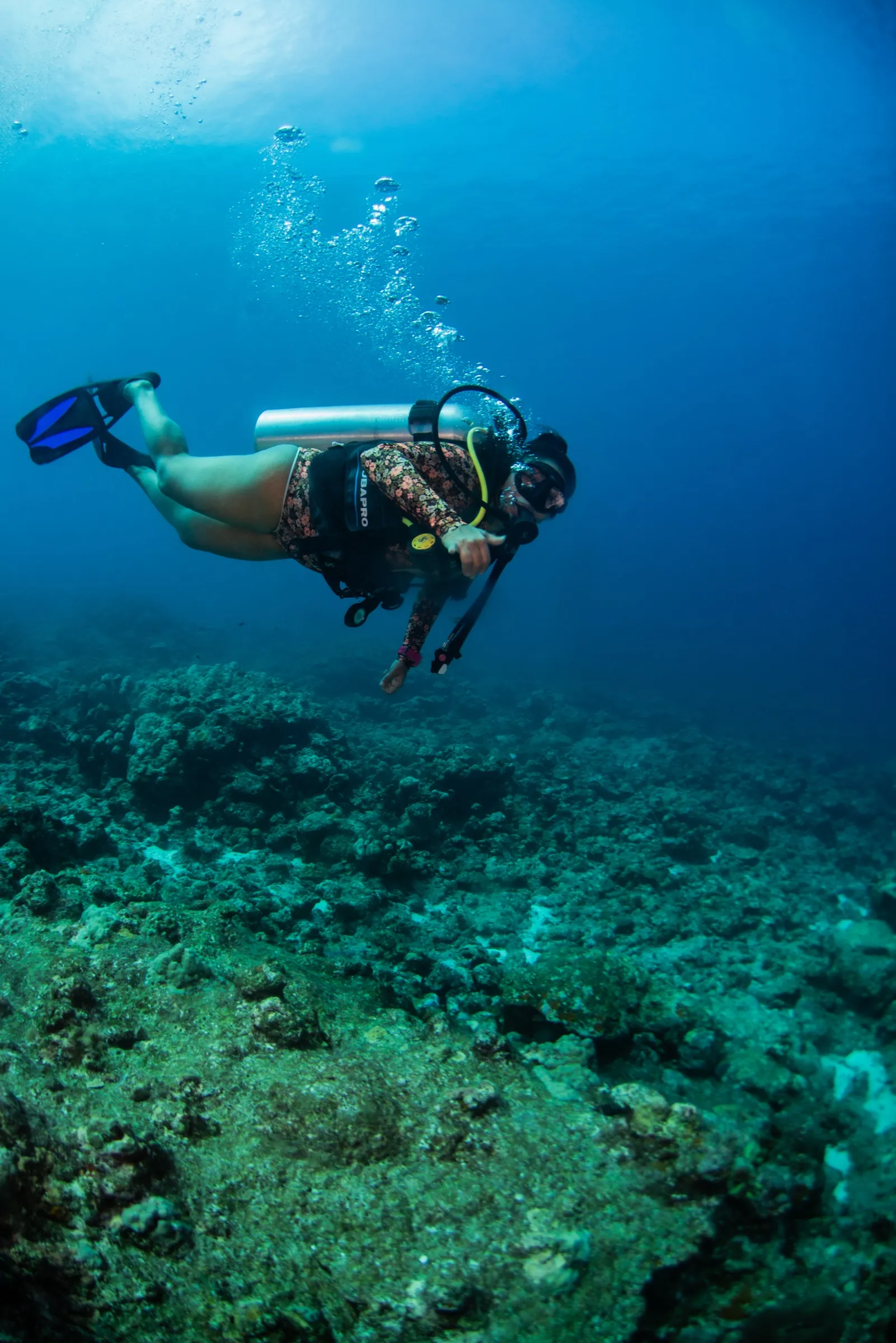
Trim is the body position the rest of your diving sits on. Get it wrong and every other skill (finning, gas use, buoyancy) is fighting against your posture. Get it right and the rest becomes easier.
- Weighting analysis: how much, where, and why most divers carry too much
- Equipment configuration: cylinder position, BCD fit, accessory placement
- Posture: head, shoulders, hips, knees, the small adjustments that move the centre of gravity
- The difference between a trim that looks horizontal at the surface and one that holds at depth
Static hover: stillness without movement
Holding position in the water column without movement. No corrective finning. No sculling with the hands. Stable enough that someone watching can't tell whether you're going up or down because the answer is neither.
This is the foundation skill that most divers have never genuinely had. Once you have it, every other underwater skill (photography, navigation, restricted-space diving) becomes available.
Breathing-based buoyancy control
The inflator is for major depth changes. The lungs are for everything else. Most divers have this backwards.
- Lung volume as the primary buoyancy control across small depth changes
- Breathing pattern that maintains stable buoyancy and stable PO₂ simultaneously
- The breathing discipline that carries directly into technical diving and CCR
Dynamic buoyancy: controlled movement
Controlled depth transitions without corrective finning. Ascending and descending at chosen rates, stopping precisely where you intend to stop, in any orientation, without using your fins to brake.
- Buoyancy in variable conditions: thermoclines, haloclines, current
- Identifying and correcting your specific trim and buoyancy faults
- Recovering from disturbance: what happens when something pushes you out of trim and how the recovery looks
Course structure
Duration is 2 days, recommended 3 for divers wanting full integration. Almost all time is in the water, with a structured debrief after each session. Student ratio is 1:2 maximum.
Locations: Maldives · Sri Lanka · Pondicherry · Lakshadweep · Meghalaya
Fees and pricing
Pricing is tailored to your course and location. A full breakdown is provided before any commitment is made.
Ready to train?
Enquire via WhatsApp or call +91 82489 40670. Donarun responds personally to every enquiry.
Common questions
Where can I improve my buoyancy and trim in India?
Buoyancy and trim training runs across India (Pondicherry, Lakshadweep, Meghalaya), Sri Lanka, and the Maldives, taught by Donarun Das — a technical and rebreather instructor who dives in exactly the horizontal, hands-free trim this course builds. It is the foundation every other diving skill sits on.
How do I know if I need this course?
If your buoyancy is not consistently neutral without finning to maintain depth, or if your body position is not reliably horizontal underwater, this course will directly address it. Most divers with 20 to 200 dives benefit significantly.
Is this course just for beginners?
No. Experienced divers, including some with hundreds of dives, carry buoyancy and trim habits built over years of poor feedback. This course is often most useful to divers who think their buoyancy is already fine.
Will this course make a difference to my technical diving?
Directly. Unstable buoyancy in technical diving creates real safety risk: silt-outs in overhead environments, uncontrolled ascent rates, gas waste. This course eliminates the root causes before they become technical diving problems.
What comes next?
Buoyancy and trim sorted? Propulsion is the next layer, the kick cycles that let you control precisely where you go underwater, without disturbing anything below or around you.
Pricing
Pricing is tailored to your course, location, and schedule. A full breakdown is provided before any commitment is made.
Frequently asked questions
- What are the prerequisites for Buoyancy & Trim?
- No specific prerequisites; enquire directly to confirm the course suits your experience level.
- What certification do I receive after completing Buoyancy & Trim?
- This is a non-certification programme, so no formal agency certification is issued.
- How long is the Buoyancy & Trim course?
- The Buoyancy & Trim course runs for 2 days.
- Where do you run this course?
- Courses run across the Maldives, Sri Lanka, and India (Pondicherry, Lakshadweep, and Meghalaya), scheduled around your dates and the right dive site for the course.
- How much does Buoyancy & Trim cost?
- Pricing is quoted individually, because dive centre fees, certification costs, and logistics vary by course, location, and schedule. You get a full breakdown before any commitment.
- Who teaches this course?
- Donarun Das, a TDI Trimix Instructor, KISS Sidewinder CCR Instructor, and PADI Staff Instructor teaching across the Maldives, Sri Lanka, and India, with 15+ years of diving experience and a mechanical engineering background from NIT Silchar.