Propulsion Workshop
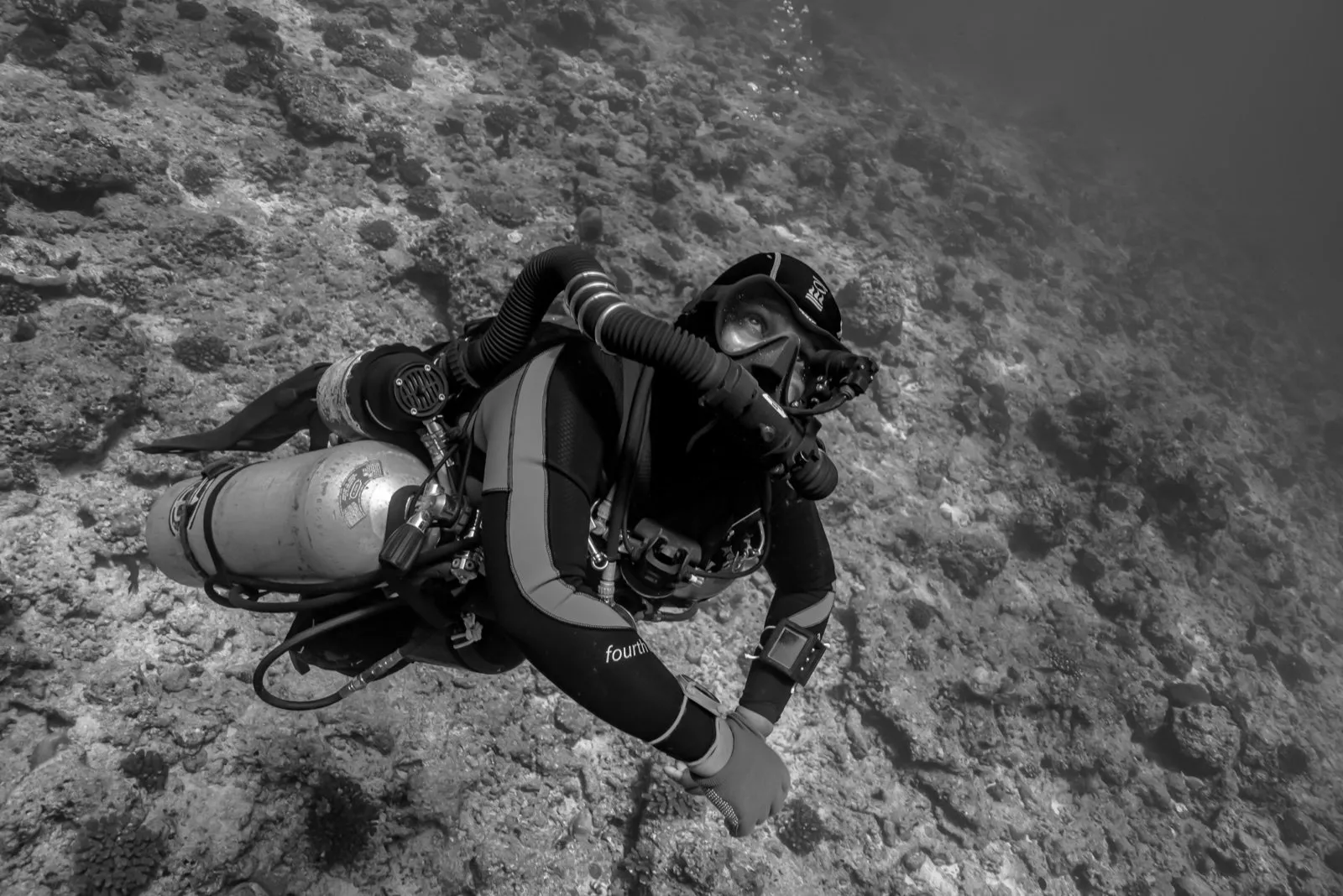
Most divers learn one kick in their Open Water course and use it for everything. The modified flutter kick works fine in open water. It is wrong for overhead environments, wrong for silty conditions, and inefficient for long swims. This course builds the full propulsion toolkit.
Each kick cycle is drilled in the water until it is clean, not demonstrated once and signed off. Frog kick. Modified flutter. Back kick. Helicopter turn. Modified frog for restrictions. No-kick hovering. Real mechanics, real practice, real feedback.
Who this course is for
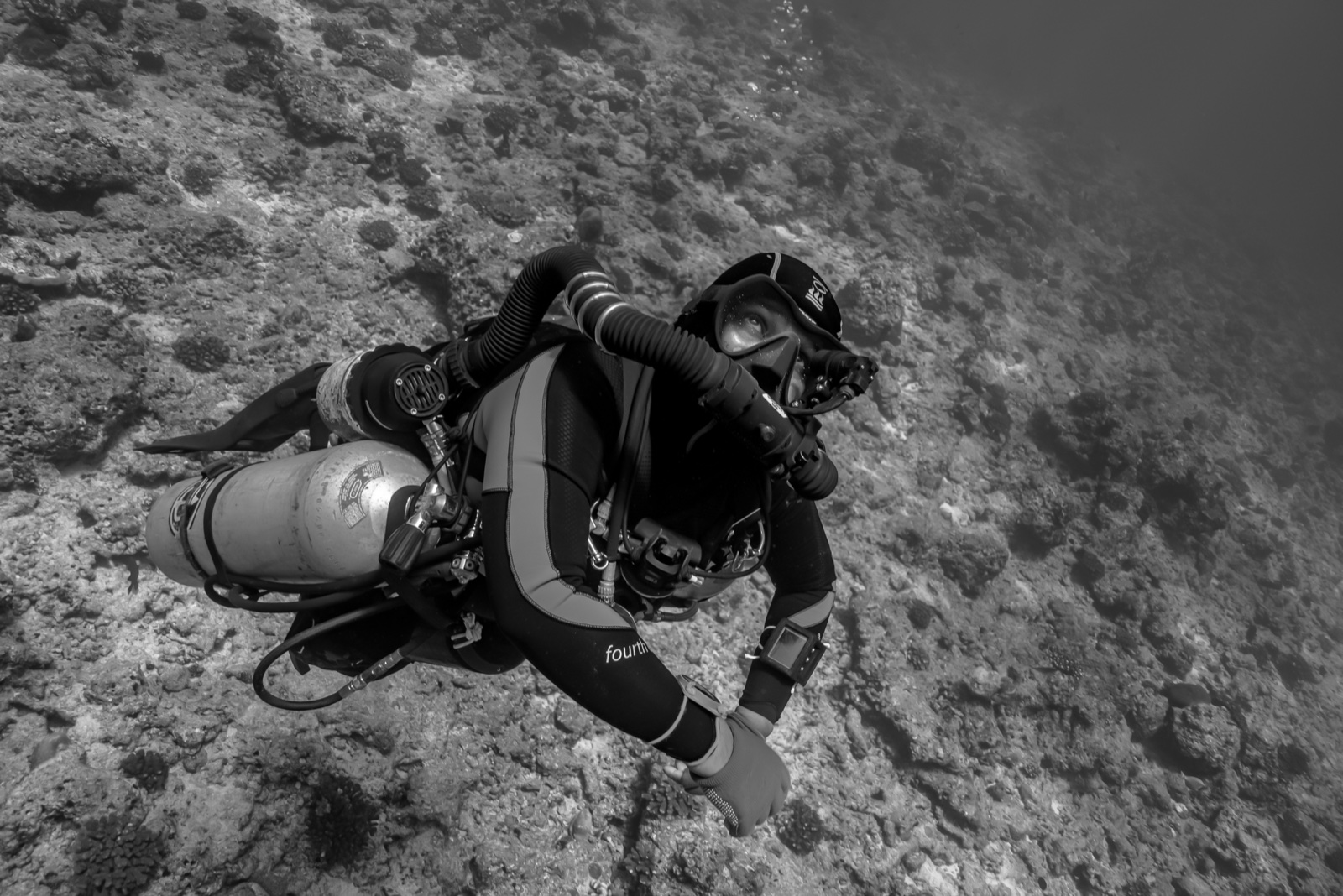
- Any diver who wants to move underwater with precision and control
- Divers entering silty environments, cavern, or wreck penetration
- Anyone preparing for technical diving, CCR, or cave diving
- Underwater photographers and videographers who need stable, manoeuvrable positioning
Prerequisites
- Open Water certification
- Basic buoyancy control. Completing Buoyancy & Trim first is strongly recommended
Kick cycles covered
- Frog kick: The primary technical diver kick, for power, range, and silt avoidance
- Modified flutter: Efficient open-water forward propulsion without the high kick rate
- Back kick: Reverse movement in tight spaces without turning around
- Helicopter turn: Pivoting in place, position changes without forward movement
- Modified frog: Low-power kick for restrictions and close ceilings
- No-kick hovering: Holding position using only buoyancy, zero propulsion
Course structure
- Duration: 2 days
- Format: In-water drill sessions with debrief after each session
- Locations: Maldives · Sri Lanka · Pondicherry · Lakshadweep · Meghalaya
- Student ratio: 1:2 maximum
Fees and pricing
- Pricing: Tailored to your course and location. Enquire for a full breakdown
- Diving costs: Billed at cost. You pay the diving facility directly at B2B/trade rates. No markup.
- Certification: Additional, where applicable.
Ready to train?
Enquire via WhatsApp or call +91 82489 40670. Donarun responds personally to every enquiry.
Common questions
Where can I learn frog kick, back kick, and helicopter turn in India?
These finning techniques — frog kick, modified frog, back kick, and helicopter turn — are drilled in this two-day Propulsion Workshop across India (Pondicherry, Lakshadweep, Meghalaya), Sri Lanka, and the Maldives, taught by Donarun Das. Few Indian courses teach them explicitly; this one is built around them, with video feedback after every session.
Why do I need different kick styles?
Different kicks are appropriate for different environments. The modified flutter that works in open ocean silts out overhead environments. The frog kick that works in caves is too powerful close to coral. Each environment needs its own propulsion tool.
Is propulsion training necessary if I mostly dive open water?
It improves control and efficiency in any environment. Better propulsion means less air consumption, better positioning for photography, and more precise movement in current. Open-water divers benefit substantially.
Do I need good buoyancy before taking this course?
Yes, strongly recommended. Without stable buoyancy, propulsion drills cannot be performed correctly. Completing Buoyancy & Trim first is the standard recommendation.
What comes next?
Physical skills developed: buoyancy, trim, and propulsion. Decompression Theory is the mental layer: understanding what your body is doing on every dive at every depth.
Pricing
Pricing is tailored to your course, location, and schedule. A full breakdown is provided before any commitment is made.
Frequently asked questions
- What are the prerequisites for Propulsion Workshop?
- No specific prerequisites; enquire directly to confirm the course suits your experience level.
- What certification do I receive after completing Propulsion Workshop?
- This is a non-certification programme, so no formal agency certification is issued.
- How long is the Propulsion Workshop course?
- The Propulsion Workshop course runs for 2 days.
- Where do you run this course?
- Courses run across the Maldives, Sri Lanka, and India (Pondicherry, Lakshadweep, and Meghalaya), scheduled around your dates and the right dive site for the course.
- How much does Propulsion Workshop cost?
- Pricing is quoted individually, because dive centre fees, certification costs, and logistics vary by course, location, and schedule. You get a full breakdown before any commitment.
- Who teaches this course?
- Donarun Das, a TDI Trimix Instructor, KISS Sidewinder CCR Instructor, and PADI Staff Instructor teaching across the Maldives, Sri Lanka, and India, with 15+ years of diving experience and a mechanical engineering background from NIT Silchar.