Browse Depth Notes
Bubble Trouble
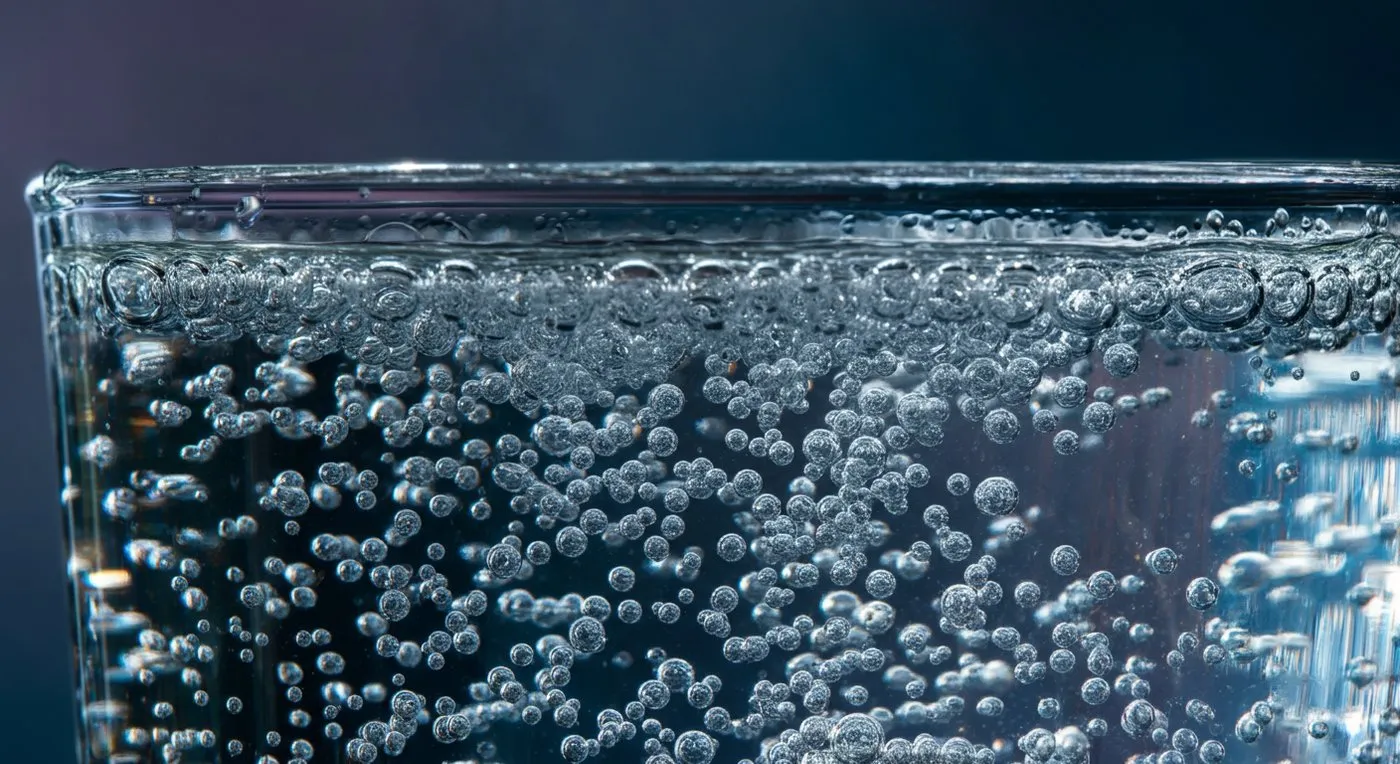
Bubbles form on almost every dive. The question is whether they cause harm.
May 22, 2025 · 9 min read
Two ways to model the same dive
Every decompression algorithm is trying to answer one question: how fast can you come up without getting hurt? There are two big families of answer, and they disagree about what they're even watching.
The first family is the dissolved-gas models: Haldane, then Bühlmann's ZHL-16C (the standard dissolved-gas algorithm) with gradient factors bolted on top. These track the tension of inert gas, meaning the pressure of the nitrogen or helium dissolved in your tissues: how much is in each compartment (one of the model's sixteen imaginary tissue groups), and whether that pressure has climbed too far above the surrounding pressure. The limit they enforce is the M-value: the most supersaturation (excess dissolved-gas pressure) a tissue can tolerate before bubbles are assumed to become a problem. Stay under it and you're judged safe.
The second family is the bubble models: VPM (Yount and Hoffman, 1986) and RGBM (Wienke). They start from a different assumption. They say bubbles aren't a maybe; tiny gas seeds are already there, all the time, so the thing worth limiting isn't tension, it's the volume of gas that actually comes out of solution.
Tension versus volume: that split is what drives everything below.
Where the bubble models start: micronuclei
Bubble models assume your tissues are seeded with micronuclei: microscopic gas pockets, well under a micron across, held open by a skin of surfactant (a soap-like coating) so they neither collapse nor dissolve away.
Here is why that skin matters. A bare bubble that small should not survive at all. Surface tension squeezes a tiny sphere hard, and the smaller the sphere the harder it squeezes, enough to crush the gas back into solution. The surfactant coat is what props the seed open against that squeeze, and it is the whole reason a standing population of nuclei can sit in your tissues indefinitely instead of vanishing.
The model's claim is that these are always present. You don't have to create a bubble from nothing; you just have to grow one that's already sitting there.
Each nucleus has a critical radius, a tipping point set by the tug-of-war between the gas pushing outward and the surface tension squeezing inward. On ascent the surrounding pressure drops, so the gas inside pushes harder: a nucleus already bigger than its critical radius wins that contest and grows, while a smaller one is still dominated by surface tension and shrinks back into solution. Because that balance depends on pressure, the threshold itself shifts as you come up. VPM's job is to keep the total volume of growing gas under a ceiling, the critical-volume hypothesis. To do that, it asks you to start stopping deeper and spend less time at the shallow stops than a gradient-factor plan would.
Bubbles you can actually hear
What surprises most new students: we can detect bubbles in perfectly healthy divers after ordinary dives, and we have been able to for decades.
Park a Doppler probe or an echo machine over a big vein and you can hear venous gas emboli (VGE), bubbles riding the blood back toward the lungs. They get graded on scales like Spencer (0 to IV) or Kisman-Masurel, from silent to a continuous roar. Here is what those grades actually sound like through the probe:
Listen · Doppler bubble grades (Spencer scale 0–IV)
- Clean signal No bubbles — just the heart. A normal post-dive finding.
- Occasional bubbles The odd click between beats. Still considered acceptable.
- Many bubbles Frequent clicks, but the heartbeat still dominates. Worth watching.
- Bubbles outnumber the beat Clicks come more often than the heart sounds. Elevated DCS risk.
- Continuous roar A near-constant hiss that drowns the heart out — the "white-out". Highest risk.
Recorded over a large vein with a precordial Doppler probe. Grade 0–I is a normal post-dive finding; Grade II and up correlates with higher decompression-sickness risk — even in divers with no symptoms at all.
The clicks are bubbles passing under the probe; the steady thump underneath is the heart. By Grade IV the bubbles almost bury the heartbeat. But a VGE grade is a biomarker. It tells you bubbles formed and got picked up by the venous side. It is not a diagnosis.
Same dive, two different ascents
Before we get to the test, it helps to see where the two model families actually part ways, because it isn't in theory, it's in the shape of your ascent.
A Bühlmann computer running gradient factors watches tension. As long as each tissue stays under its M-value, it is happy to keep letting you climb, so it tends to bring you up toward the shallow stops fairly directly and then hold you there, shallow, where the difference between the gas in your tissues and the pressure around you is largest and offgassing (shedding gas) is fastest.
A bubble model watches the seeds instead. Its reasoning runs like this: a micronucleus is most fragile in the first few metres off the bottom, while the surrounding pressure is still high enough to keep it squeezed small. Shoot straight up past that zone and the same seed gets a long ride through low pressure, growing the whole way to the surface. So a bubble model tells you to stop deeper and sooner: pause a few metres above the bottom, keep the seeds compressed, and only then come up.
Put the two schedules side by side and the disagreement is easy to see.
The same dive, two ascent shapes
That deep-first shape is the bubble models' big, testable claim, and it is exactly the part that got put to the test.
The test that broke the deep-stop story
For most of the 2000s, deep stops looked obviously right. Stop deep, before the big pressure drops, keep the bubbles small, surface cleaner. It matched the bubble-model math and it matched the Doppler data: deep stops really do lower the measured VGE count.
Then people checked whether lower bubble counts meant fewer cases of the bends. They didn't.
The 2008 UHMS/DAN deep-stops workshop laid out the problem, and the U.S. Navy's NEDU TR 11-06 study nailed it down: a controlled comparison of a deep-stop schedule against a shallower-biased one of equal length found the deep-stop profile produced more decompression sickness, not less. The deep stops let fast tissues offgas while slow tissues kept loading, so divers arrived at the shallow stops more saturated than before.
So the bubble models' signature move did the opposite of what it promised. Deep stops cut the bubbles you can hear on a Doppler probe, but they did not cut the bends, and in this trial they made it worse.
And when you stop counting bubbles and just count the bends, comparing whole algorithms by how many divers actually got hurt, the gap between the two families all but disappears. Across large datasets of real dives the measured difference in decompression-sickness rates between dissolved-gas and bubble algorithms is tiny, well inside the statistical noise, rather than a clear safety edge for either one.
Three things people get backwards
"Fewer bubbles means a safer dive." Not reliably. Doppler counts and clinical outcomes can move in opposite directions, and deep stops are the textbook case.
"Micronuclei are some exotic edge case." No. The bubble models assume they're sitting in your tissues right now, on every dive, as the default state. There's nothing rare about them.
"Bubble models are newer, so they must be better." Newer isn't more correct. The specific thing the bubble models predicted that dissolved-gas models didn't, deep-first stops, is exactly the thing controlled outcome testing knocked down.
What's settled, and what isn't
Settled. Bubbles form on essentially every dive. A VGE grade is a biomarker, not the bends. And the deep-stop benefit the bubble models were built to deliver is not supported by outcome data.
Still open. How micronuclei are actually born, stabilised, and cleared over a dive day (friction between moving tissues, an idea called tribonucleation, is one leading candidate). Whether VPM or RGBM offer any real edge on particular long trimix profiles. And the fact that bubble models remain genuinely useful for comparative planning, for seeing how one profile stacks against another, even though they're no safer in absolute terms.
So in practice: don't bolt extra deep stops onto a normal ascent. Come up at a controlled rate and give the shallow stops their full time, because that is where offgassing is fastest. The practical handle you actually turn is still gradient factors on a Bühlmann computer, and the most valuable stop in any plan is the shallowest one. Read safe ascents for where that gradient does the most work.
References
- Yount DE, Hoffman DC. On the use of a bubble formation model to calculate diving tables. Aviat Space Environ Med. 1986;57(2):149–156. PubMed 3954703
- Wienke BR, O'Leary TR. Understanding Modern Dive Computers and Operation (RGBM). Springer, 2018. doi:10.1007/978-3-319-94054-0
- Doolette DJ, Gerth WA, Gault KA. Redistribution of decompression stop time from shallow to deep stops increases incidence of decompression sickness in air decompression dives. NEDU TR 11-06, 2011.
- Bennett PB, Wienke BR, Mitchell SJ (eds.). Decompression and the Deep Stop. UHMS/DAN Workshop Proceedings, 2008.
- Doolette DJ, Mitchell SJ. Recreational technical diving part 2: decompression from deep technical dives. Diving Hyperb Med. 2013;43(2):96–104. PubMed 23813463
Decompression theory is something I drill on every trimix and CCR course, not the equations, but how to read what your computer is and isn't telling you. Ask me about training.
Common questions
Do deep stops reduce decompression sickness?
No. Deep stops lower the count of bubbles you can hear on a Doppler probe, but the NEDU trial found a deep-stop schedule produced more decompression sickness than a shallower-biased one of equal length. Fewer measured bubbles did not mean fewer bends.
What is the difference between dissolved-gas and bubble decompression models?
Dissolved-gas models (Haldane, Bühlmann) limit how supersaturated each tissue gets, the M-value. Bubble models (VPM, RGBM) assume tiny gas seeds are already present and limit the volume of gas that comes out of solution, which pushes deeper, earlier stops.
Are bubbles in the blood after a dive normal?
Yes. Venous gas emboli are detectable after most ordinary dives in divers who feel completely fine. A bubble grade is a biomarker that gas came out of solution, not a diagnosis of decompression sickness.
Share this post