Cavern Diver
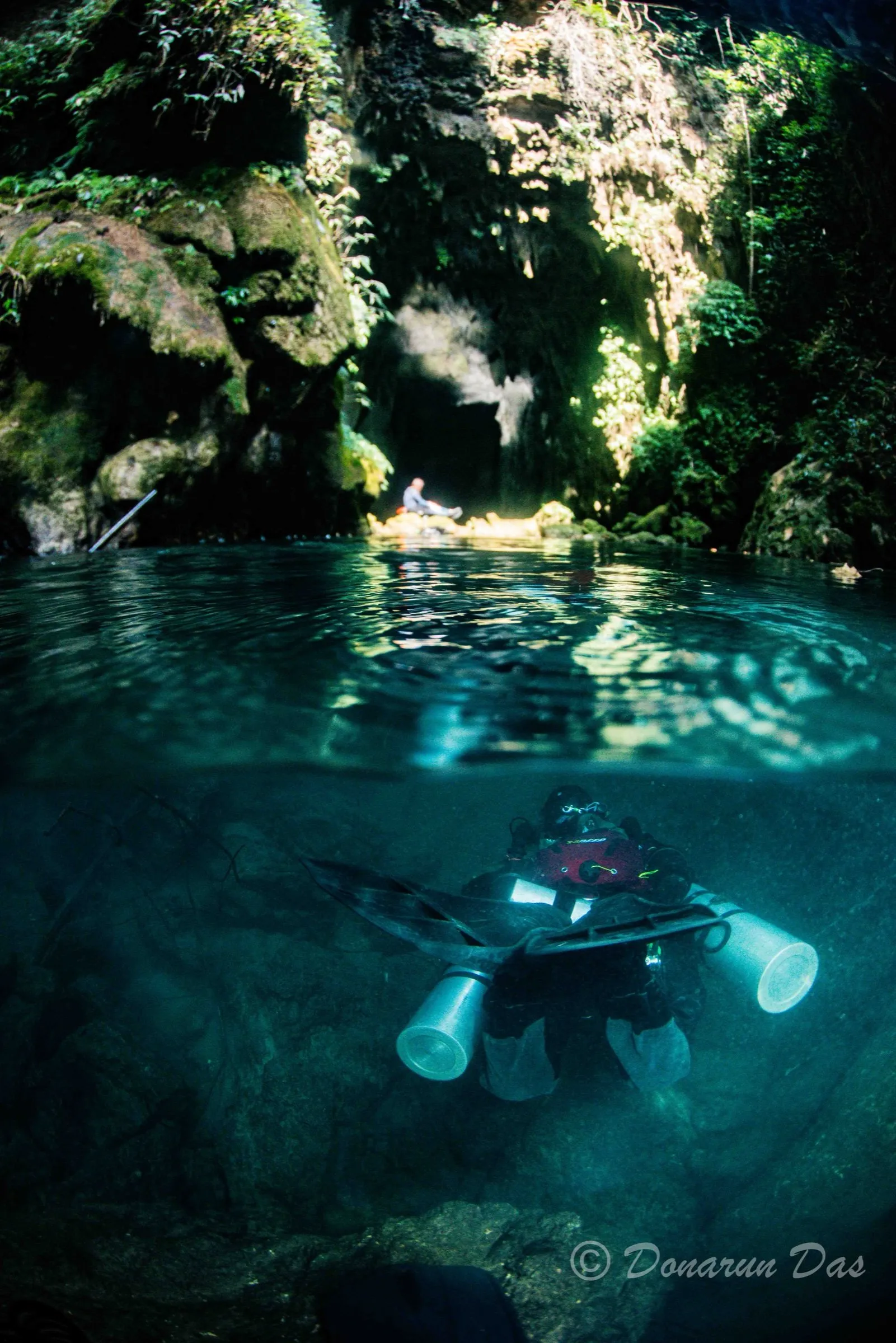
When you can't just go up
Open water diving has one reliable emergency response: ascend. When something goes wrong, you go up.
Cavern diving takes that away. Not because the ceiling is physically blocking you (cavern training stays within the natural light zone, where you can always see the entrance) but because the conditions that send divers toward the surface in open water (disorientation, equipment issues, stress) are exactly the conditions that make an unplanned ascent dangerous inside an overhead structure.
This is the first psychological shift in overhead environment training: the option you've relied on in every other dive is no longer the right response. It gets replaced by a set of trained responses that work better, but only if they've been practiced before they're needed.
Cavern training is where those responses get built. Two to three days in the natural light zone, developing the habits of gas discipline, propulsion control, and stress management that every overhead environment above this level requires.
What cavern is, and isn't
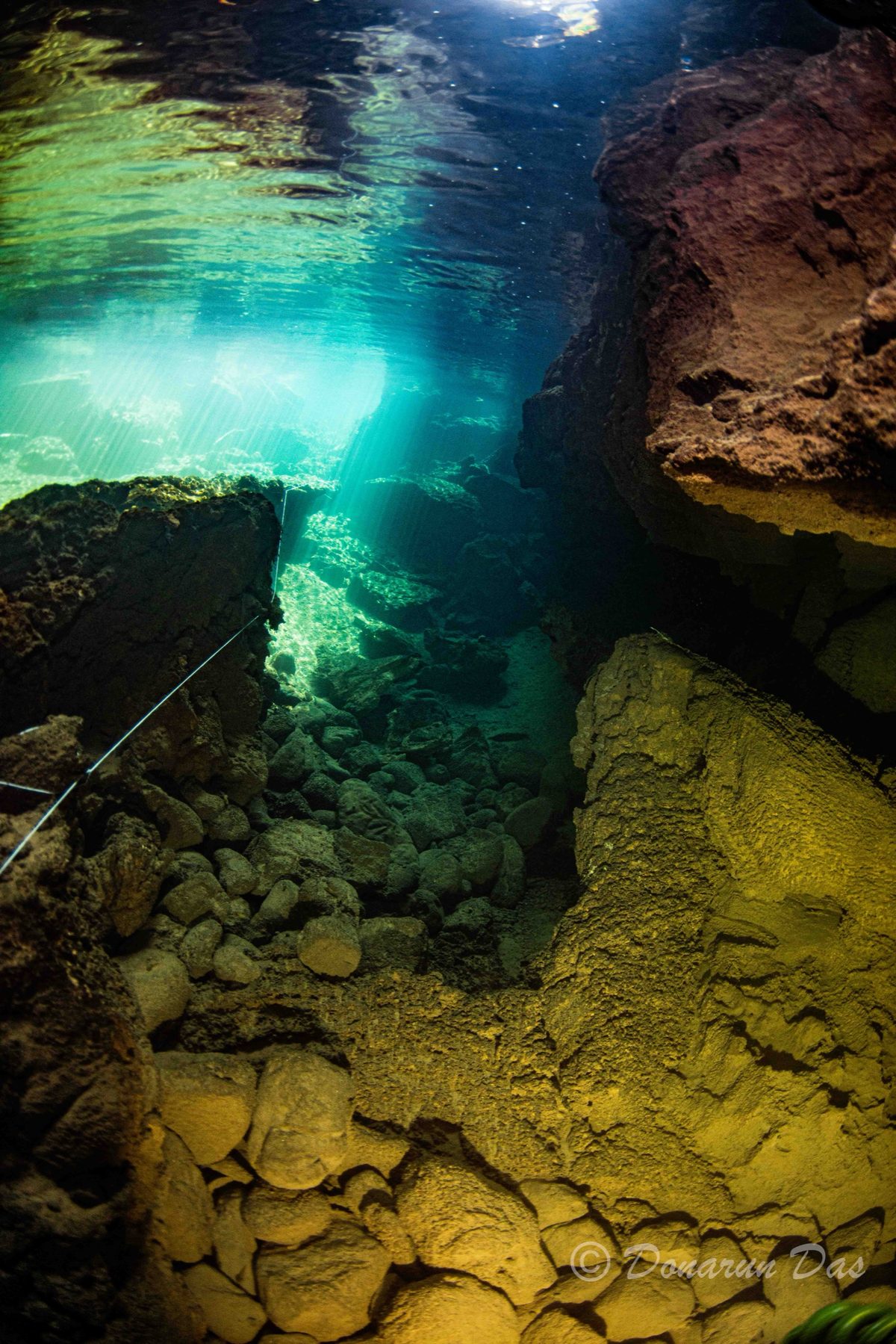
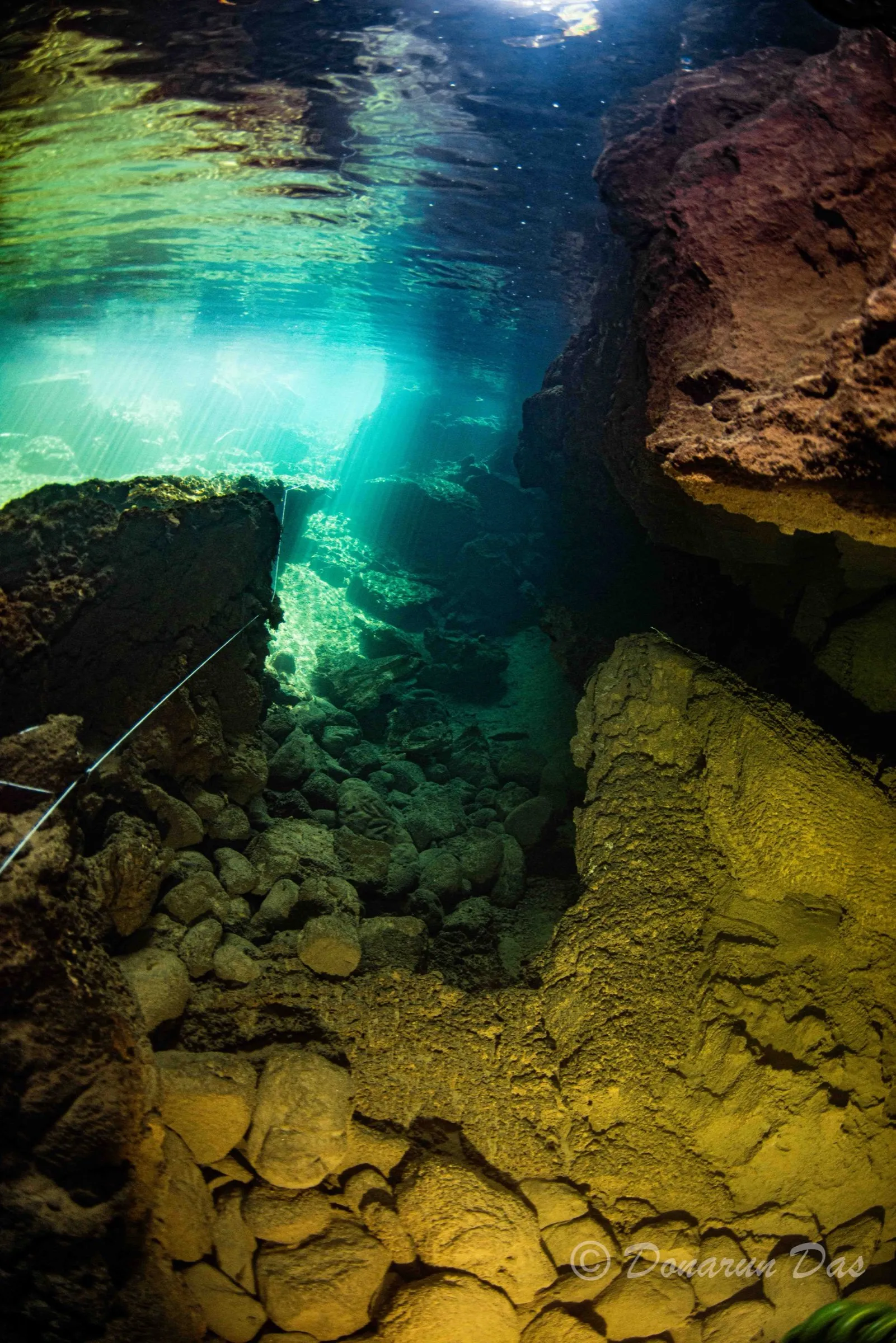
Cavern training keeps you within the light zone at all times. You can always see the entrance. You never lose visual contact with natural daylight. There's no deep penetration, no navigation by line in full darkness, no extended time in the overhead.
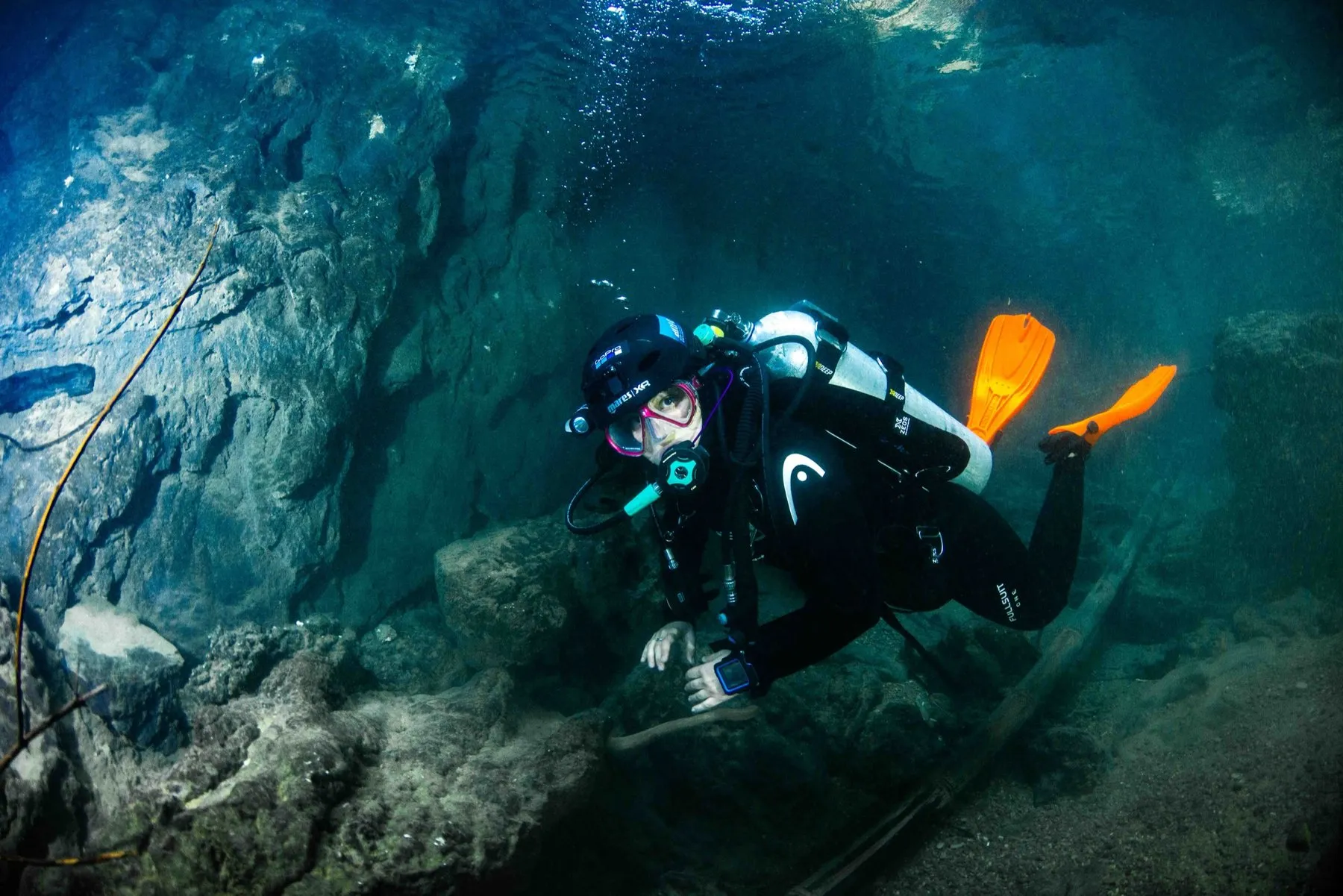
What there is: a partially-overhead environment where silt disturbed by a poor kick cycle reduces visibility to zero in seconds. A space where gas discipline is enforced by physics, not convention. An environment where the stress responses that work in open water (kick harder, swim faster, go up) make the situation worse, not better.
The habits built here, in a controlled overhead with natural light visible, are the ones that will hold when the environment is less forgiving.
What you'll learn
The overhead mindset
This isn't a philosophical concept. It's a specific set of practiced responses:
- Turn the dive when you've used one-third of your starting gas, not when you feel like it
- Know where the exit is at every moment, not approximately
- Respond to stress by slowing down, not speeding up
- When visibility drops, the response is touch-contact navigation to the line, then line-follow to the exit, not swimming harder toward where you think the entrance is
None of these responses are complicated. All of them require deliberate practice before they're reliable under stress.
Anti-silt propulsion: assessed near an actual silty floor
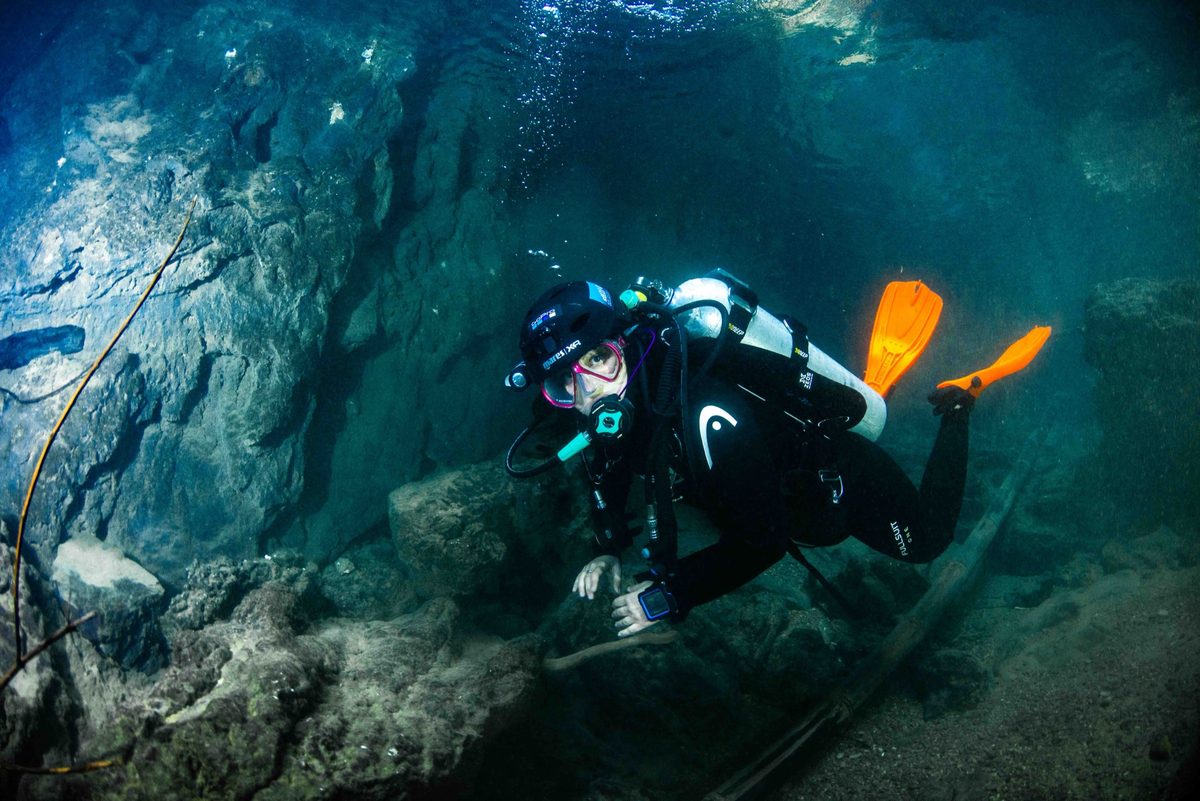
The kick cycles practiced here aren't new. Modified frog, back-kick, helicopter turn are the same as open water. What's new is the standard they're assessed to: near a silty bottom, where the consequence of a poor kick is immediate and visible.
- Modified frog kick inside a cavern structure: power without turbulence
- Back-kick to reverse without turning around in a confined space
- Helicopter turn for directional change without forward movement
- No-fin hovering: zero motion, held by buoyancy control alone
- Entry and exit approach that doesn't disturb the floor
If your kick silts the water, you repeat it until it doesn't. The assessment isn't a checklist.
Gas discipline
- Rule of thirds: one-third in, one-third out, one-third reserve, with the logic behind it, not just the rule
- Gas tracking throughout the dive, not at checkpoints
- Turn procedures triggered by gas pressure, not time or distance
- Managing the gap when your gas consumption and your buddy's are different
- Out-of-gas drill at cavern limits, practiced, not just described
Light and line skills
- Primary light handling and communication signals in the overhead
- Primary and secondary tie-off points within cavern training limits
- Line following in reduced visibility: by feel, not by sight
- Touch-contact navigation when visibility is zero
- Simulated lost-line exit procedure
Stress management in confined spaces
Training introduces stress deliberately:
- Darkness simulation
- Navigating by touch when all visual references are gone
- Out-of-gas drill with a team member
- Controlled response when a team member is disoriented
Prerequisites
- Advanced Open Water (PADI) or equivalent
- 25+ logged dives
- Comfortable neutral buoyancy, not still developing it
- Physical fitness, no strong response to enclosed spaces
If buoyancy isn't solid yet, a half-day session can be integrated before the course starts. Mention this when you get in touch.
Course duration
2 to 3 days. Skills are assessed against a real standard: propulsion near a silty bottom, gas discipline under a simulated out-of-gas scenario. You progress when performance holds up in conditions.
Gear
- Sidemount configuration strongly preferred, the cleanest body profile in tight spaces
- Two cutting tools
- Primary light and two backup lights
- Backup mask
- Spool and primary reel
- DSMB
- Wrist slate
- Dive computer
Backmount divers can be accommodated. Discuss configuration when you enquire.
Training locations
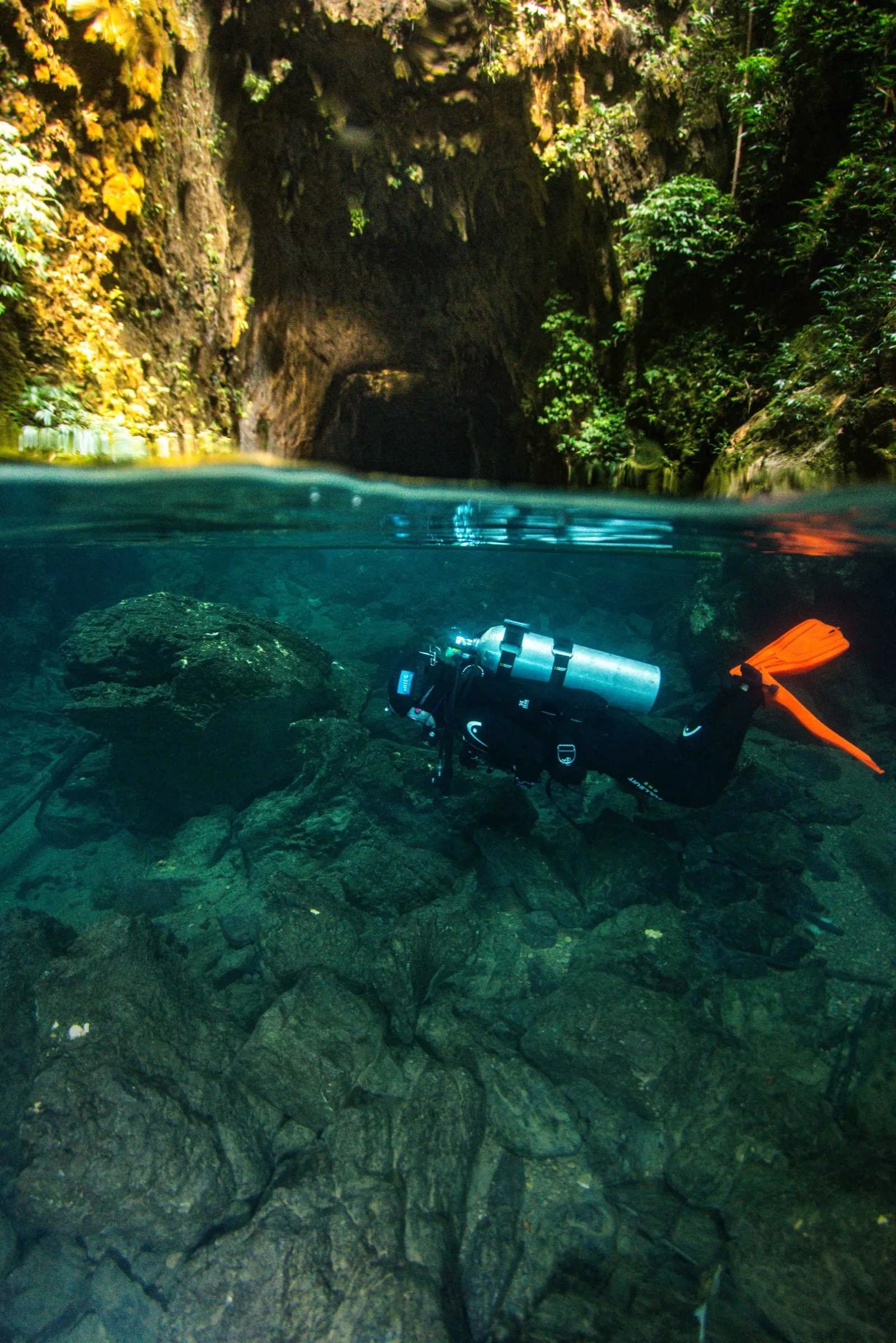
Meghalaya: natural cave and cavern systems in northeast India; the best overhead training environment in the region. The discipline built here comes from real conditions, not simulated ones.
Pondicherry and Lakshadweep: for combined cavern and open-water technical training within the same trip.
Maldives: for divers who want to combine cavern and CCR or expedition training in blue water.
Why this before CCR or cave
CCR training standards recommend overhead environment experience. Cave training requires cavern completion before Intro to Cave. The habits built here (gas discipline, anti-silt technique, line awareness, stress response) are load-bearing for everything above.
Divers who skip cavern and go directly to cave or CCR training carry gaps. This course is two to three days. The habits it builds last a diving career.
What comes next
- Advanced Wreck: man-made overhead environments, complementary skill set
- Sidewinder CCR MOD1: cavern is a standard CCR prerequisite
- Intro to Cave, with a qualified cave instructor at an appropriate site
Frequently asked questions
Is cavern the same as cave diving?
No. Cavern stays within the natural light zone. You can always see the entrance. Full cave involves penetrations beyond natural light and requires separate, progressive cave certifications. Cavern is the correct first step, not a shortcut to cave.
Why can't I just learn these skills gradually through experience?
The habits that overhead environments require are specific and counter-intuitive. The gas discipline, the stress response, the propulsion standard: these don't develop naturally through open-water experience. Divers who try to acquire them gradually in overhead environments tend to acquire them after an incident, not before one.
Do I need prior technical training?
No. Advanced Open Water with solid buoyancy is sufficient. This course is often taken alongside or before open-circuit technical training. It doesn't require decompression diving experience.
Can I combine cavern with advanced wreck in one trip?
Yes, and it's efficient. The core skills overlap: propulsion, gas discipline, line handling, stress management. Combined training uses shared foundational modules and saves time. Discuss this when you enquire.
Enquire about training
Enquire here. Donarun responds personally to every enquiry.
Pricing
Pricing is tailored to your course, location, and schedule. A full breakdown is provided before any commitment is made.
Frequently asked questions
- What are the prerequisites for Cavern Diver?
- No specific prerequisites; enquire directly to confirm the course suits your experience level.
- What certification do I receive after completing Cavern Diver?
- You receive a PADI Cavern Diver certification, recognised worldwide, upon successful completion.
- How long is the Cavern Diver course?
- The Cavern Diver course runs for 2 to 3 days.
- Where do you run this course?
- Courses run across the Maldives, Sri Lanka, and India (Pondicherry, Lakshadweep, and Meghalaya), scheduled around your dates and the right dive site for the course.
- How much does Cavern Diver cost?
- Pricing is quoted individually, because dive centre fees, certification costs, and logistics vary by course, location, and schedule. You get a full breakdown before any commitment.
- Who teaches this course?
- Donarun Das, a TDI Trimix Instructor, KISS Sidewinder CCR Instructor, and PADI Staff Instructor teaching across the Maldives, Sri Lanka, and India, with 15+ years of diving experience and a mechanical engineering background from NIT Silchar.