Other Specialties
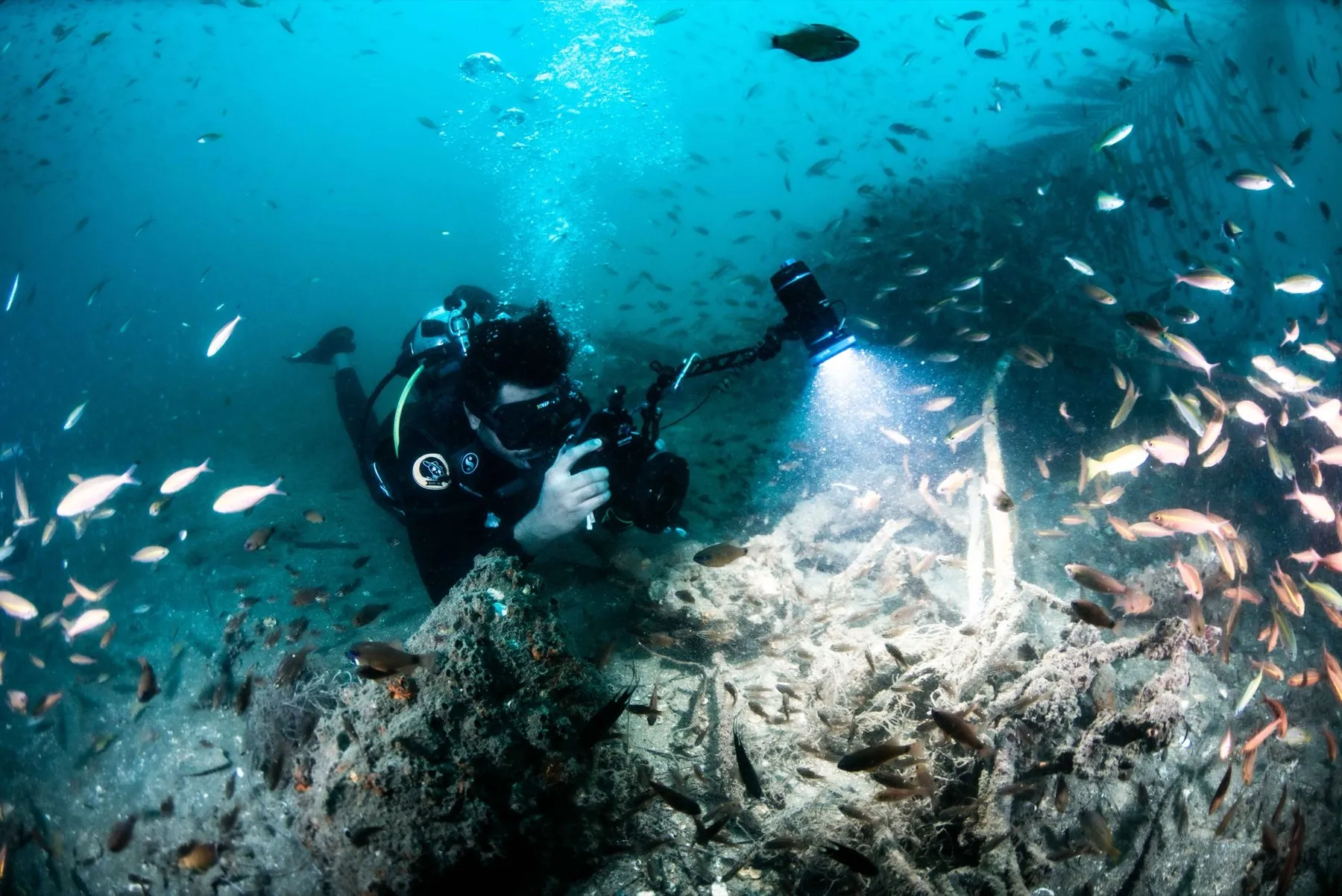
Specialty diving, done properly
Specialty courses exist because some types of diving are genuinely different, different enough that a dedicated course makes you measurably better at them, rather than learning by doing and picking up bad habits along the way.
A night dive done without preparation is a reasonable dive in the dark. A night dive done after a night diving specialty is a completely different experience. You know what to look for, how to communicate, how to manage your torch, and why everything looks different when the sun goes down.
The same applies to drift diving, underwater photography, search and recovery, and the others. The question is always the same: do you want to do the thing, or do you want to be good at the thing?
Specialty courses available
Night Diving
Night diving is one of the best experiences recreational diving offers. Creatures that hide during the day come out. The reef looks completely different in torchlight. And the dive itself, without the visual noise of daylight, often feels more focused and intimate than any daytime dive.
- Torch technique and signalling
- Buddy procedures in low visibility: staying together, communicating, managing separation
- What changes at night: marine life, buoyancy cues, navigation references
- Entry and exit in darkness
Duration: 1 to 2 days | Dives: 2 to 3
Drift Diving
Drift diving done well feels like flying. Done without preparation, it feels like being dragged somewhere you didn't plan to go.
- Reading current: identifying direction, speed, and where it will take you
- Neutral buoyancy in moving water, the technique that makes drift diving effortless
- Buddy and team management in current
- Drift entries and exits
- DSMB deployment in current, the skill that matters most when you're moving
Duration: 1 to 2 days | Dives: 2 to 3
Underwater Photography
Photography changes how you dive. It forces you to slow down, pay attention, and see things you'd normally swim past.
- Buoyancy control for photography, the foundation of every good shot
- Exposure basics: aperture, shutter speed, and ISO in underwater conditions
- Strobe positioning and lighting
- Composition underwater, and why it's different from above water
- Equipment care and housing maintenance
This course works with your existing camera setup. Compact cameras, GoPros, DSLRs in housing: bring what you have.
Duration: 1 to 2 days | Dives: 2 to 3
Search and Recovery
Search patterns, lift bags, and the discipline to find something that isn't where you thought it was. Surprisingly useful beyond the obvious scenario.
- Underwater search patterns: U-pattern, expanding square, rope-guided
- Rigging and using a lift bag safely
- Compass navigation for search planning
- Team coordination on search dives
Duration: 1 to 2 days | Dives: 2 to 3
Fish Identification
The Indian Ocean and the broader Indo-Pacific hold some of the highest marine biodiversity in the world. Most divers see fish; fish ID divers see the ecosystem.
- Introduction to Indo-Pacific reef fish families and species
- Identification methods and reference use
- Recording observations on a dive slate
- Understanding reef ecology through species distribution
Duration: 1 day | Dives: 2
Peak Performance Buoyancy
The most universally useful specialty in recreational diving. If your buoyancy isn't exactly where you want it, this is the one.
- Ballast optimisation: finding the exact right amount of weight
- Trim and positioning for your specific body, suit, and equipment
- Breathing control for precise depth management
- Breath-hold hover, fin pivot, and stationary control
- Buoyancy in conditions: current, surge, and limited visibility
Duration: 1 day | Dives: 2
Altitude Diving
For freshwater diving above 300m: lakes, reservoirs, and mountain dive sites. The dive table and computer adjustments required at altitude, and the logistics of diving at elevation.
Duration: 1 day | Dives: 2
Don't see what you're looking for?
If there's a specialty or skill you want to develop that isn't listed here, get in touch. Most PADI specialties can be run with advance notice, and custom skill-building sessions focused on a specific area can be arranged.
Pricing
Pricing is tailored to your course, location, and schedule. A full breakdown is provided before any commitment is made.
Who teaches these
All specialty courses are taught by Donarun personally.
Where we train
The Maldives, Sri Lanka, and India. Location matched to the specialty: drift diving in current-exposed sites, night diving at reef or wreck sites, photography in high-visibility locations. Confirmed when scheduling.
Frequently asked questions
Can I do multiple specialties in one trip?
Yes, combinations are common and efficient. Night diving and underwater photography work well together. Drift diving and fish ID pair naturally. Mention your goals and a custom multi-specialty plan can be put together.
How many dives do I need before doing specialty courses?
Advanced Open Water is the standard prerequisite for most specialties (25+ dives). Some, like Peak Performance Buoyancy, can be taken earlier. Confirm your current certification and dive count when you enquire.
Are certifications included?
Certification fees are as per the agency's actual cost and vary by certification. A full cost breakdown is provided upfront before any commitment.
How far in advance do I need to book?
Most specialties need a week or two of notice for site selection and logistics. Some (like underwater photography with specific equipment) benefit from more lead time. Get in touch as early as you can.
Enquire about specialty training
Enquire here. Donarun responds personally to every enquiry.
Pricing
Pricing is tailored to your course, location, and schedule. A full breakdown is provided before any commitment is made.
Frequently asked questions
- What are the prerequisites for Other Specialties?
- No specific prerequisites; enquire directly to confirm the course suits your experience level.
- What certification do I receive after completing Other Specialties?
- You receive a PADI Other Specialties certification, recognised worldwide, upon successful completion.
- How long is the Other Specialties course?
- The Other Specialties course runs for 1 to 3 days.
- Where do you run this course?
- Courses run across the Maldives, Sri Lanka, and India (Pondicherry, Lakshadweep, and Meghalaya), scheduled around your dates and the right dive site for the course.
- How much does Other Specialties cost?
- Pricing is quoted individually, because dive centre fees, certification costs, and logistics vary by course, location, and schedule. You get a full breakdown before any commitment.
- Who teaches this course?
- Donarun Das, a TDI Trimix Instructor, KISS Sidewinder CCR Instructor, and PADI Staff Instructor teaching across the Maldives, Sri Lanka, and India, with 15+ years of diving experience and a mechanical engineering background from NIT Silchar.