Advanced Trimix / Road to 100m
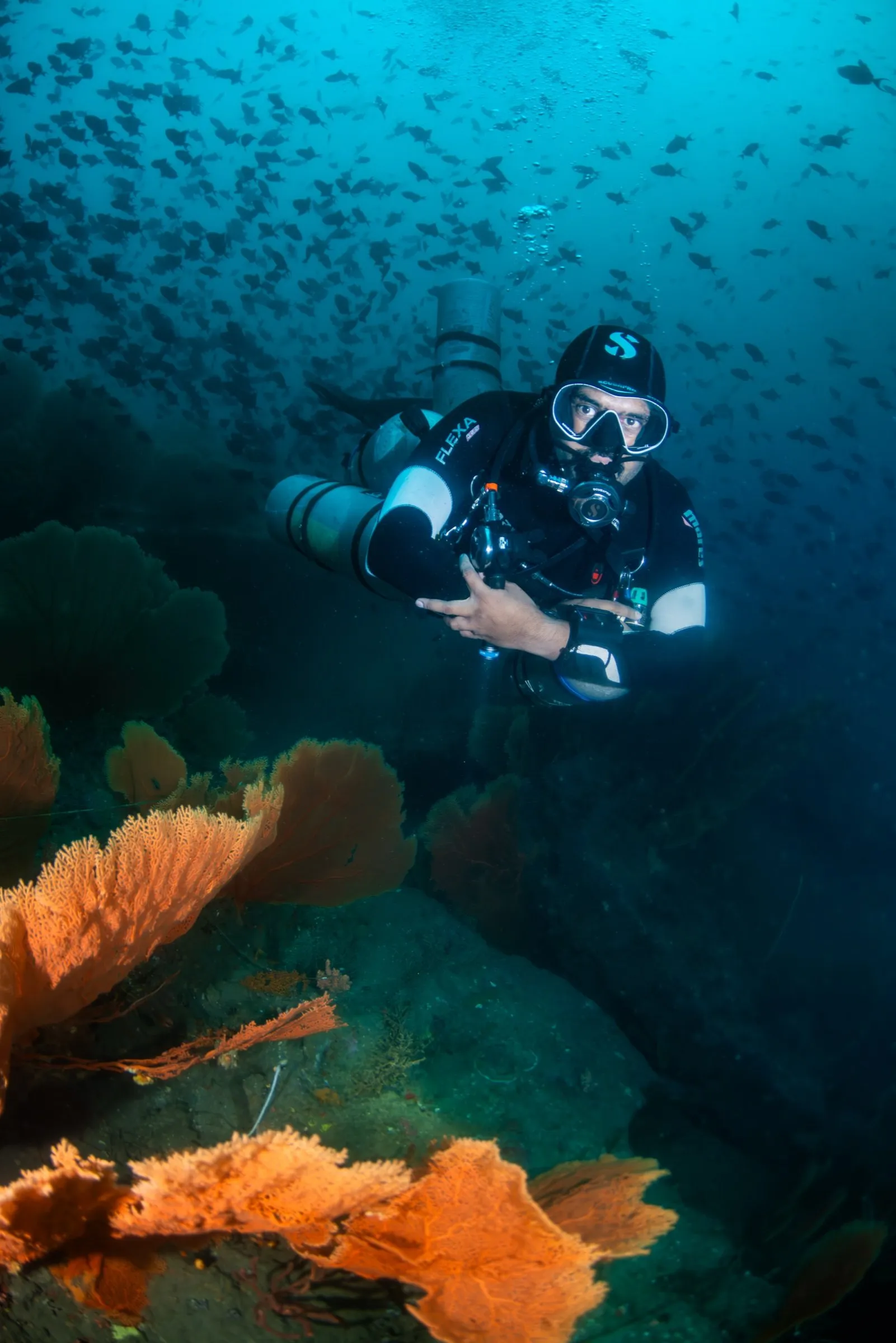
The 103 metre dive
In March 2026, a three-diver team completed the deepest recorded civilian open-water dive in India: 103 metres at Lakshadweep. I led that dive.
The planning took weeks. Gas logistics required coordination across three locations. The decompression profile carried over 80 minutes of mandatory stop time. Every failure scenario we'd trained for was on the mental checklist on the descent. Nothing went wrong, because nothing was left to chance.
That depth isn't the point of this course. The point is what that dive required: the gas planning discipline, the decompression strategy, the failure response framework, the team coordination, and the honest pre-dive assessment of whether every person in the water was genuinely ready. This course teaches all of it.
What changes at 100 metres
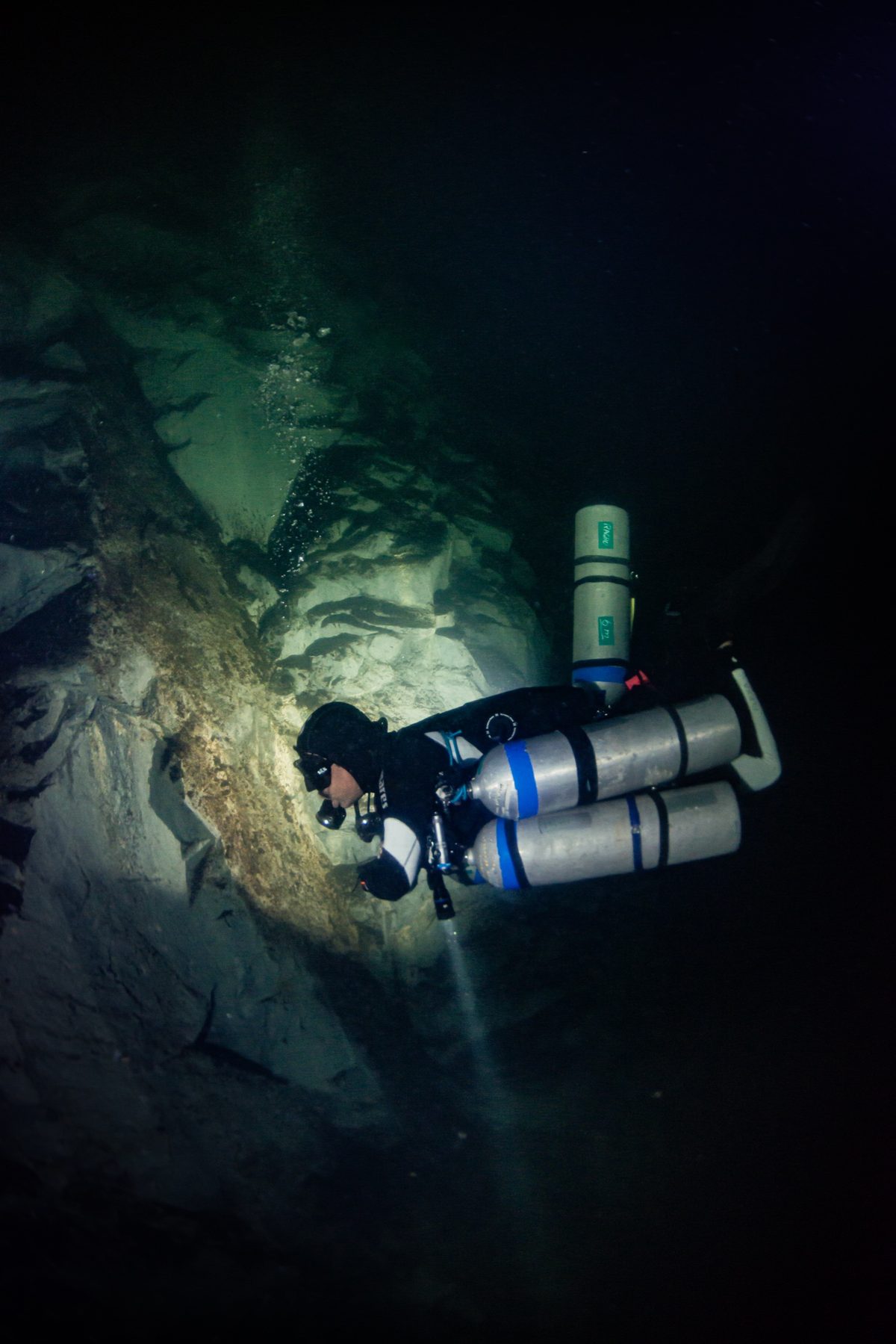
At 75m on trimix, a disciplined technical diver is working within a manageable system. The decompression is long but predictable. The gas volumes are high but calculable. The failure scenarios are serious but well-rehearsed.
At 100m, you encounter a different category of dive. Decompression obligations are measured in hours. Hypoxic gas handling adds a layer of management that normoxic trimix doesn't require. Gas volumes are large enough that stage logistics need pre-planning that goes beyond the dive itself. A team separation at 90m, when both divers have different decompression obligations and limited deco gas, is a crisis in a way that the equivalent scenario at 70m simply isn't.
The difference between 75m and 100m isn't linear. This course exists because that gap requires explicit training, not just accumulated depth experience.
What you'll learn
Hypoxic trimix planning at full depth
At 100m, practical trimix mixes are hypoxic, below 18% oxygen. Managing that across a full dive:
- Hypoxic mix selection for 80 to 100m targets based on END and PPO₂ targets
- Surface protocols for hypoxic gas: pre-dive verification, cylinder marking, handling discipline
- PPO₂ tracking from hypoxic bottom gas through the full decompression sequence
- Oxygen exposure management across extended bottom times at elevated depth
- The transition from hypoxic to normoxic gas during ascent: switch discipline and timing
Multi-gas logistics at the 100m level
A 100m trimix dive carries three to four gases: hypoxic bottom mix, normoxic trimix or EAN, EAN50, and 100% oxygen. Managing them cleanly:
- Pre-dive gas verification protocols for hypoxic mixes
- Gas switch discipline at every transition when hypoxic gas is present
- Rock-bottom calculation at 100m: conservative RMV estimates, realistic gas volumes
- Planning for the loss of any gas at any phase of the dive
- Team gas management when the team's decompression obligations aren't identical
Long-profile decompression
100m dives carry 60 to 90 minutes of decompression. That's a long time in the water column:
- Gradient factor strategy for high-helium mixes across long decompression profiles
- Slow-tissue loading management across extended bottom times
- Ascent curve adjustments for cold, elevated workload, and high-helium mixes
- Conservative decisions when conditions deteriorate during the ascent
- Handling lost stops, missed switches, and unplanned additional decompression
Turn the dials, add deco gas · 100 m for 10 min on 10/70 trimix
Deco gas
- First stop
- —
- Deco time
- —
- Runtime
- —
Dive profile · depth over runtime
Helium loads and clears fast, so a trimix dive front-loads its decompression. GF Lo sets how deep the first stop sits; GF Hi sets how long the shallow stops run. Now add deco gas: a richer mix at the stop breathes almost no inert gas, so the gradient home widens and the stops shrink. Switch back to back gas only and watch the same dive balloon — that's why nobody does 100 m on a single cylinder.
Failure response at depth
Every failure scenario from Trimix 60 to 75m, trained at 80 to 100m with more complex gas configurations:
- Hypoxic mix confusion during the dive
- Loss of primary deco gas at depth with a long decompression obligation
- Regulator failure at 90 to 100m
- Team separation at 80m with different decompression plans
- CO₂ buildup recognition: the symptom onset is faster under the high workload of a 100m dive
- Extended decompression: managing an additional 20 to 30 minutes of stop time that wasn't planned
All dives are filmed. No dive to 90m until 80m performance is genuinely solid under task loading.
Expedition-level planning
- Site assessment for 100m dives: current windows, visibility forecasting, exit logistics
- Deep-line deployment and team management at depth
- DPV integration for long-range trimix dives (optional)
- DSMB deployment and surface coordination after long decompression ascents
- Post-dive debriefing that identifies actual decision errors, not just outcomes
The Bharat 100m project
This course is the direct pathway to the Bharat 100m project, a structured programme for divers aiming at 100m on open-circuit trimix in the Indian Ocean. Training locations, site selection, and gas logistics for this project are built into Advanced Trimix training. If this is your goal, say so when you enquire.
Prerequisites
- TDI Trimix / PADI Tec 65 Trimix or equivalent, with documented dives in the 60 to 75m range
- 150+ logged dives, minimum 15 to 20 trimix dives at 60m and above
- Demonstrated proficiency in multi-stage gas management and decompression execution
- Strong buoyancy and trim under full expedition gas load
- Good physical fitness: the gear load at 100m requires real strength and endurance
The prerequisite assessment is honest. If your 75m performance isn't solid, 100m training won't fix it. It'll surface the gaps at the depth where gaps are expensive. I'll tell you clearly if the foundation needs more work first.
Course duration
5 days minimum. Mastery-based, with no dive to 100m until 80m performance is solid under task loading. Additional days are available and regularly necessary.
Helium logistics
Hypoxic mixes require earlier lead times and specific cylinder handling. All gas coordination for training is managed end-to-end. You won't arrive to find logistics unresolved.
Gear
- Twinset or sidemount balanced for deep hypoxic trimix
- Three to four stage cylinders (hypoxic bottom mix + EAN50 + O₂ minimum)
- Long-hose primary regulator
- Two cutting tools
- Primary light and two backup lights
- Wetnotes, wrist slates, compass
- Two DSMBs with reels
- Two dive computers with trimix/decompression capability
- Drysuit strongly recommended for profiles of this length
Training locations
- Lakshadweep: the right location for 90 to 100m training in the region. Deep walls, blue water, the right conditions when the season is correct
- Maldives: for expedition-grade deep wall diving and combined DPV/trimix training
- Bhimkund: for divers pursuing cave trimix alongside the depth progression
What comes next
For most divers, Advanced Trimix to 100m is a destination certification. For those continuing:
- Sidewinder CCR MOD1: remove the open-circuit gas volume constraint at 100m depth
- Bhimkund cave trimix project
- Bharat 100m project
- Scientific diving protocols
The theory behind the course
The depth notes go deeper on the science this course puts into practice:
Frequently asked questions
Can I do a 100m or deep trimix course in India?
Yes. Deep open-circuit trimix training to 100m runs in India — primarily on Lakshadweep's deep walls — plus Sri Lanka and the Maldives, taught by Donarun Das, who led the deepest verified civilian dive in India (103m at Lakshadweep, 2026). It is the same gas planning and decompression discipline that dive required.
TDI Advanced Trimix or PADI Tec 100?
Both certify to 100m on hypoxic trimix with full multi-gas decompression. TDI Advanced Trimix is the open-circuit certification and the more common pathway for divers training in this region. PADI Tec 100 on open circuit is the equivalent PADI route. Confirm your intended pathway when you enquire.
How many trimix dives do I need at 60 to 75m before starting?
Minimum 15 to 20, with documented multi-gas decompression execution. The number matters less than the quality. If those dives weren't well-planned and well-executed, more of them doesn't make you ready. The pre-training assessment establishes where you actually stand.
What does a 100m dive cost in gas?
Hypoxic trimix is the most expensive mix in recreational technical diving. All gas is billed at cost from verified suppliers, no markup. Estimates are provided before training.
Is 100m safe?
100m on hypoxic trimix, planned and executed correctly, with appropriate training and equipment, is within the reach of a disciplined technical diver. It requires genuinely solid prerequisites, honest self-assessment, and a planning standard that leaves nothing to assumption. Not everyone who enquires is ready for it, and I'll say that directly during the prerequisite assessment. That honesty is part of what this training is.
Enquire about training
Enquire here. I answer every enquiry myself, whatever your timezone.
Pricing
Pricing is tailored to your course, location, and schedule. A full breakdown is provided before any commitment is made.
Frequently asked questions
- What are the prerequisites for Advanced Trimix / Road to 100m?
- No specific prerequisites; enquire directly to confirm the course suits your experience level.
- What certification do I receive after completing Advanced Trimix / Road to 100m?
- You receive a PADI / TDI Advanced Trimix / Road to 100m certification, recognised worldwide, upon successful completion.
- How long is the Advanced Trimix / Road to 100m course?
- The Advanced Trimix / Road to 100m course runs for 5 days.
- Where do you run this course?
- Courses run across the Maldives, Sri Lanka, and India (Pondicherry, Lakshadweep, and Meghalaya), scheduled around your dates and the right dive site for the course.
- How much does Advanced Trimix / Road to 100m cost?
- Pricing is quoted individually, because dive centre fees, certification costs, and logistics vary by course, location, and schedule. You get a full breakdown before any commitment.
- Who teaches this course?
- Donarun Das, a TDI Trimix Instructor, KISS Sidewinder CCR Instructor, and PADI Staff Instructor teaching across the Maldives, Sri Lanka, and India, with 15+ years of diving experience and a mechanical engineering background from NIT Silchar.