Bubble Models
May 22, 2025 · 7 min read
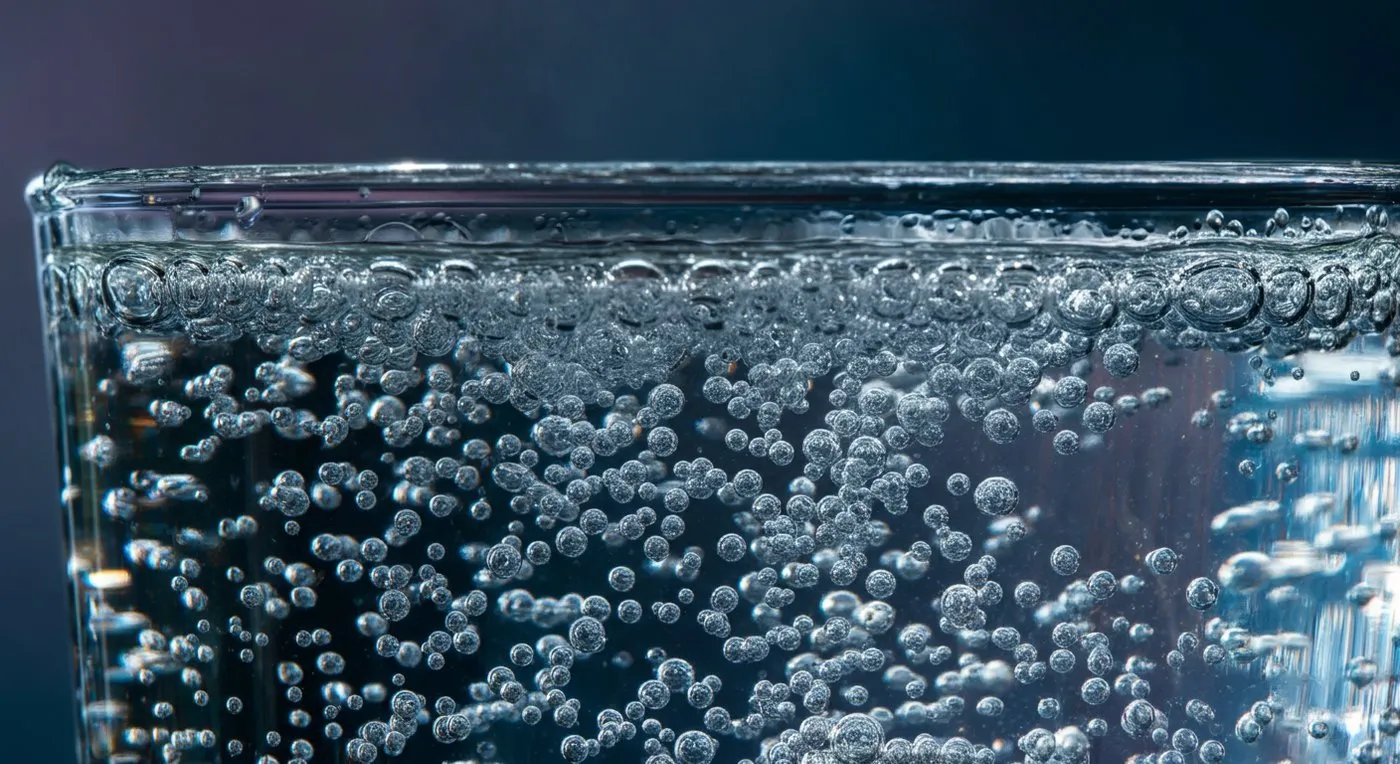
Understanding Deep Stops and Microbubbles
Gas content models like Bühlmann's ZHL-16C are effective at predicting how nitrogen dissolves and leaves your tissues. What they do not model is bubble nucleation and growth — they assume gas stays dissolved until supersaturation exceeds the M-value threshold. In practice, small bubbles can form even when tissue pressures are technically within those limits. Doppler ultrasound detects intravascular bubbles in a significant proportion of divers after ordinary no-stop dives who report no symptoms at all.
Bubble models were developed to address this gap. Where dissolved-gas models track chemical concentration, bubble models track the physical behaviour of gas nuclei in tissue.
Bubble Nuclei: Where Bubbles Come From
Bubbles do not appear from nothing. They grow from bubble nuclei — microscopic gas seeds, generally with radii under 1 µm, stabilised in tissue crevices and at cell interfaces. These nuclei are always present in the body. They are too small to cause harm by themselves, but they act as seeds for bubble growth when supersaturation rises during ascent.
The analogy is a pressurised soda bottle. The liquid looks clear under pressure. Open the cap — providing nucleation sites for the dissolved CO₂ — and bubbles form immediately. Nitrogen in tissues behaves the same way. The nuclei are always there; what changes during ascent is whether they grow.
PFO: When the Pulmonary Filter Is Bypassed
The lungs normally trap venous gas emboli (VGE) in the pulmonary capillaries, where they gradually reabsorb. Patent foramen ovale (PFO) — a small residual opening between the right and left atria present in approximately 25–30% of the population — creates a right-to-left shunt that allows venous blood, and any bubbles it carries, to bypass this filter and enter arterial circulation directly. The bubbles are then delivered to the brain, spinal cord, and coronary arteries.
PFO investigation is typically triggered by unexplained neurological DCS on a profile that appeared conservative. Diagnosis is by bubble contrast echocardiography during a Valsalva manoeuvre.
Subclinical Damage Below the Symptom Threshold
Bubble formation in diving is not binary. Research using Doppler monitoring detects circulating bubbles in a substantial fraction of asymptomatic divers after standard no-stop recreational dives. Alongside bubble detection, laboratory studies have found elevated endothelial microparticles (EMPs) and platelet activation markers post-dive in divers who feel completely fine.
EMPs are shed from damaged vascular endothelium — they represent real, if subclinical, mechanical injury from bubble contact with vessel walls. Post-dive fatigue in compliant divers is substantially driven by the inflammatory cascade following this endothelial damage, not merely by exertion. This subclinical picture is the physiological basis for conservative gradient factor settings and adequate surface intervals between repetitive dives — even clean profiles carry a bubble burden.
The Science Behind Bubble Models
David Yount (University of Hawaii) and Bruce Wienke (Los Alamos National Laboratory) argued that tracking dissolved gas alone was insufficient. Both proposed models that explicitly track bubble nuclei populations and growth dynamics.
Wienke's 1991 RGBM model assumes pre-formed gas nuclei with radii of 1 µm or less are always present in tissues, decreasing exponentially in number with increasing radius. A critical radius separates collapsing from expanding bubbles, dependent on the degree of decompression and tissue characteristics. Growth occurs when tissue gas tension exceeds ambient pressure by more than the Laplace-derived threshold. The model integrates compartmental gas kinetics with limits on bubble excitation, including carry-over of nuclei between repetitive dives.
Wienke's 1992 follow-up modelled correlations between surfacing bubble radii and DCS risk. Simulations showed that reduced ascent rates combined with short mid-water pauses significantly reduce final bubble size distributions.
VPM and RGBM
VPM (Varying Permeability Model), developed by David Yount and Ross Hoffman from gelatin bubble nucleation experiments, models the Laplace pressure governing each bubble nucleus. It limits bubble growth by controlling the permissible supersaturation gradient. VPM-B has not been implemented in any wrist-worn dive computer — it runs only in desktop planning software such as Subsurface and MultiDeco. Divers using VPM-B plans carry a printed schedule and use a ZHL-16C computer as a depth and time reference only.
RGBM (Reduced Gradient Bubble Model), developed by Wienke and first implemented commercially in Uwatec computers in the 1990s, tracks the bubble seed population across repetitive dives. Nuclei persist in tissues for hours after a dive, and the RGBM explicitly carries this forward when calculating the next dive's obligation. It appears in Suunto and Galileo computers, among others. Gradient factors are not user-adjustable on RGBM computers; conservatism emerges from the bubble physics equations.
Deep Stops: What the Evidence Actually Shows
The bubble model rationale for deep stops is that bubble coalescence begins as soon as ambient pressure starts dropping. Stopping deep — before large pressure reductions — should limit nuclei growth before they reach dangerous sizes. This argument gained wide acceptance in technical diving through the 2000s.
The 2008 UHMS/DAN Workshop on Decompression and the Deep Stop examined the available evidence. The key finding: deep stops reduce Doppler-detectable VGE counts, but this does not translate to reduced DCS incidence. The workshop consensus was that available evidence does not support replacing conventional shallow-stop decompression with deep-stop schedules.
The NEDU TR 11-06 study (2011) — a controlled swine study comparing shallow-biased profiles with deep-stop VPM-B equivalent profiles — found that deep-stop profiles produced higher DCS rates. The mechanism: deep stops allow fast compartments to off-gas while slow compartments continue loading gas. By the time the diver reaches shallow stops, slow tissues are more saturated. Trading manageable shallow stop obligation for a harder-to-clear deep one does not improve outcomes.
Current evidence-based practice favours shallow-biased profiles — gradient factor Lo settings of 40–60% rather than the very low values (20–30%) that produce heavy deep stops. The most important stop in any decompression profile remains the shallowest one, where the pressure gradient for off-gassing is greatest.
Key Findings Across Models
Both theoretical and experimental approaches converge on several consistent points. Controlling bubble size and growth rate is protective against DCS. Slow ascents and intermediate pressure pauses decrease surfacing bubble radii (Wienke 1992). Deep stops reduce Doppler VGE counts but not clinical DCS incidence (2008 DAN/UHMS workshop; NEDU 2011). In a LANL database comparison across 11,738 identical profiles, ZHL-16C produced 0.0135 DCS events per dive versus 0.0175 for RGBM — a difference that is not statistically significant.
Beyond Bubble Models
Bubble models improved understanding of nuclei physics and why ascent control matters. They are not consistently superior to well-implemented dissolved-gas models in outcome data, and the deep-stop argument they were built around has not held up in controlled trials. The current practical tool for adjusting ZHL-16C conservatism is gradient factors: Gradient Factors and Dive Computers.
References
Yount DE, Hoffman DC (1986) — On the use of a bubble formation model to calculate diving tables — Aviation, Space, and Environmental Medicine 57(2):149–156
Wienke BR (1991) — Reduced gradient bubble model — International Journal of Biomedical Computing 26(4):237–256
Wienke BR (1992) — Bubble rise and decay in decompression — Undersea and Hyperbaric Medicine 19(2):131–140
Bennett PB, Wienke BR, Mitchell SJ (eds.) (2008) — Decompression and the Deep Stop — UHMS/DAN Workshop Proceedings
Navy Experimental Diving Unit (2011) — TR 11-06: Decompression in Humans: A Multifactorial Analysis — NEDU Technical Report
Train With Me
Bubble models and decompression strategy are a core part of every technical course I teach. Enquire about training →
Share this post